

A catastrophic cargo loss doesn’t automatically make a freight broker liable. Under the Carmack Amendment, motor carriers and freight forwarders are liable for cargo loss or damage on interstate shipments, while a broker that only arranges transportation generally isn’t liable under that rule. But the broker’s conduct and contracts can affect the analysis, so freight broker reputation protection after catastrophic cargo loss starts with understanding who may be responsible.
Customers expect more than a claims handoff: they want prompt, honest communication and a practical path forward. The right insurance may help protect the shipper’s interests and support confidence in your business, but coverage depends on the policy terms and circumstances of the loss.
This article explains how a cargo claim can involve a carrier, forwarder, or broker; what to preserve and communicate after a loss; and how cargo insurance can fit into your reputation-protection plan. You’ll get a clearer view of the steps that keep the response organized, factual, and focused on customers.
Key Takeaways
- Separate the carrier’s role from the broker’s, then identify how the contracts and the broker’s actions may affect responsibility for a cargo claim.
- See how insurance can help address coverage gaps and demonstrate a commitment to customers’ interests.
- Build a clear first-response plan that preserves key records and keeps customer updates factual, timely, and consistent.
- Respond to public complaints with care: acknowledge the disruption, protect sensitive details, and move claim specifics into a private channel.
- Understand how a cargo loss may intersect with insurance, bond obligations, and operating authority, and where freight-specific coverage fits.
Cargo claims: carrier, forwarder, or broker?
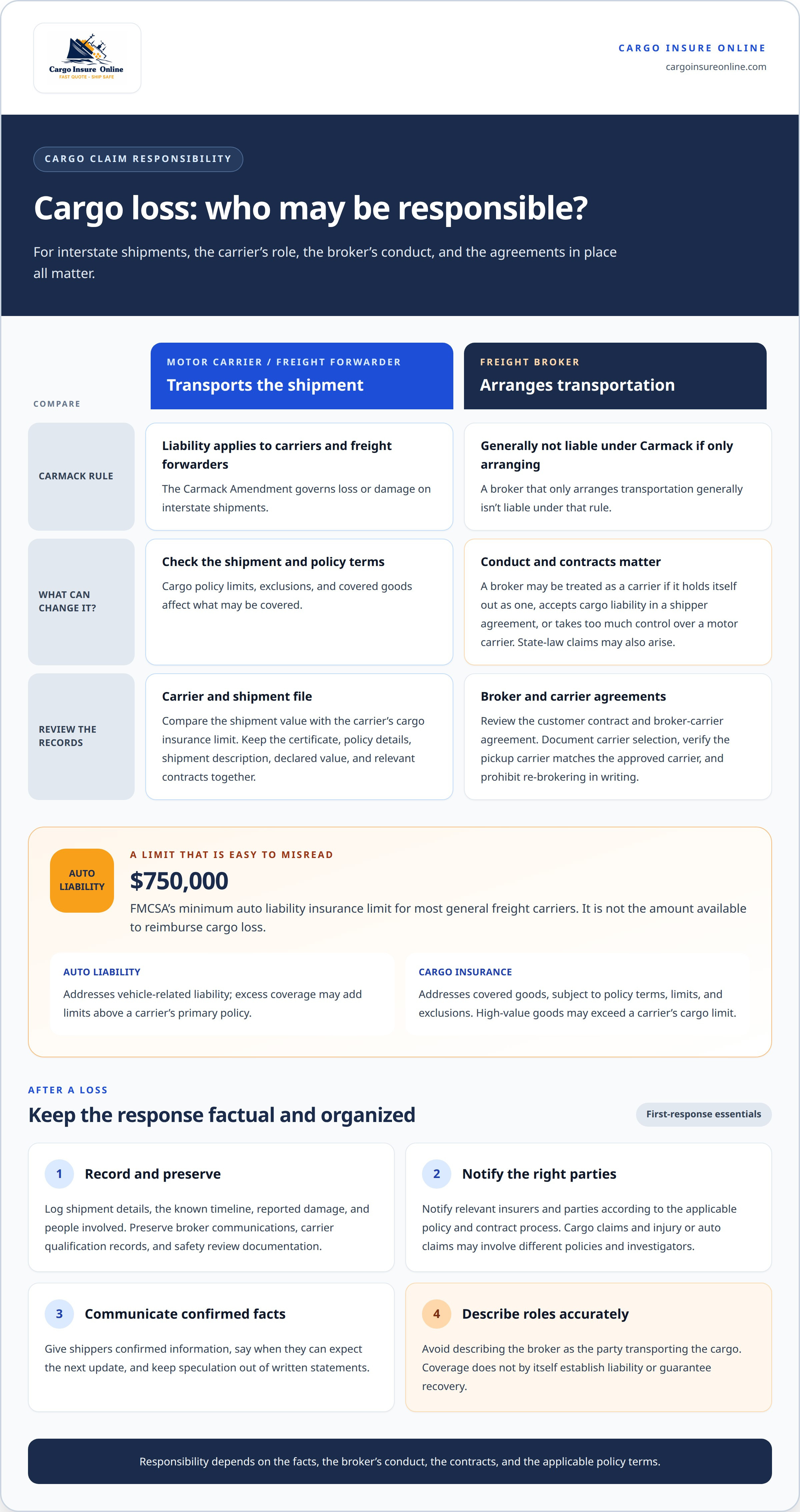
After cargo loss or damage, start by identifying who transported the shipment and who arranged it. The Carmack Amendment, 49 U.S.C. 14706, governs loss or damage on interstate shipments and places liability on motor carriers and freight forwarders. A broker that only arranges transportation generally isn’t liable under that rule. The distinction matters: a customer’s claim, a carrier’s insurance, and a broker’s contract may each raise separate issues.
A broker’s role is assessed based on conduct, not just title. Courts consider the facts case by case. A broker may be treated as a carrier if it holds itself out as one, or may accept cargo liability through a shipper agreement. Taking too much control over a motor carrier can also affect liability. State-law claims, including negligent selection or breach of contract, may arise as well. Review the customer contract and broker-carrier agreement to understand the responsibilities each party accepted.
Cargo coverage and auto liability coverage aren’t interchangeable. A motor carrier’s cargo policy addresses covered goods, subject to its terms, limits, and exclusions. The Federal Motor Carrier Safety Administration sets a minimum auto liability insurance limit of $750,000 for most general freight carriers. That auto limit shouldn’t be mistaken for the amount available to reimburse cargo loss. A crash can involve both vehicle liability and damaged freight, but the relevant policy depends on the claim.
Before tendering a shipment, compare its value with the carrier’s cargo insurance limit. If high-value goods exceed that limit, a gap may remain after a loss. These figures describe possible coverage structures, not a promise that every claim is covered. Confirm the shipment, policy terms, and applicable limits in the records for that load.
Review the carrier’s operating history as part of careful selection. FMCSA records can include safety data, authority status, inspections, BASIC percentile scores, out-of-service violations, and crash history. A score is one indicator, not a decision on its own. Consider the full record and document why you selected the carrier. Confirm that the carrier picking up the load matches the approved carrier, and prohibit re-brokering in writing.
For auto liability, excess coverage may add limits above a carrier’s primary policy. That structure concerns auto and general liability, not necessarily cargo coverage. Clear records and verification of the correct policy type help distinguish carrier responsibility from broker liability after a catastrophic loss.
Insurance’s role in protecting reputation and brand value
Insurance provides freight operations with a financial response framework when cargo is damaged, a vehicle is involved in a crash, or a broker faces a negligence claim. Its value to your reputation depends on matching each exposure to the right policy and communicating clearly with shippers.
Insurance and Brand Value
Insurance can support a broker’s reputation by helping the business respond to covered losses through an organized claims process, rather than leaving customers unsure what to do next. That matters when goods stop moving and a shipper needs accurate updates. Coverage doesn’t establish liability, guarantee recovery, or erase a service failure. Brokers protect trust by setting realistic expectations, coordinating records, and explaining which insurer is reviewing each claim.
Policy language determines how a claim is handled. Limits, exclusions, deductibles, covered property, and reporting requirements all affect whether a loss qualifies. A cargo policy may not cover every cause of loss, and a contingent policy may not respond when a broker has assumed cargo liability. Compare policy terms with shipper contracts and actual operations before a crisis. Clear alignment helps prevent surprises for both broker and customer.
Broker Policies and Documentation
Broker policies address different exposures, so a single certificate shouldn’t be treated as proof of complete protection. Workers’ compensation relates to employee injuries, while commercial auto and third-party liability address vehicle-related exposures. Errors and omissions insurance addresses claims tied to broker negligence, but doesn’t directly insure bodily injury or cargo and property damage.
For each load, keep the carrier’s insurance certificate, policy details, shipment description, declared value, and relevant contract together. A certificate summarizes insurance, but the policy wording determines coverage. Match the insured carrier and covered operations to the shipment, then retain the version reviewed at tender. A consistent file helps explain what protection applied and who handles the claim when a shipper asks for documentation.
Immediate Steps After Cargo Loss
An immediate response means coordinating evidence preservation, notifications, and customer communication after a loss. Record shipment details, the known timeline, reported damage, and people involved. Preserve broker communications, carrier qualification records, and safety review documentation from the outset. Notify relevant insurers and parties according to the applicable policy and contract process, and avoid describing the broker as the party transporting the cargo.
Give shippers confirmed facts, say when they can expect the next update, and keep speculation out of written statements. Separate the cargo claim from any injury or auto claim, since different policies and investigators may apply. A dated communication log shows what the broker knew and when. This disciplined record supports an accurate investigation and a more consistent customer response.
Claims and Business Consequences
A cargo claim can affect renewal discussions because insurers assess the broker’s operations and loss history when evaluating risk. The effect on premiums or available terms depends on the policy, claim details, and underwriting review. Keep claim files complete and explain corrective actions, such as revised carrier-selection criteria, with supporting records. A claim alone doesn’t explain the full risk picture.
Bond obligations are separate from cargo insurance. According to the Federal Motor Carrier Safety Administration, a U.S. property broker must maintain $75,000 in financial security through a surety bond or trust fund. That bond addresses unpaid freight bills, not bodily injury. Keep bond records current and distinguish them from cargo coverage when discussing operating authority. A cargo claim and a bond obligation are different issues, so document each through its own process.
What should a freight broker do immediately after catastrophic cargo loss?
Move from alarm to a controlled response: address immediate safety concerns, establish verified facts, and preserve the shipment record. In the first communications, describe the broker as arranging transportation, not as the party transporting cargo.
- Establish what happened. Identify the shipment, carrier, pickup and delivery points, and last known status. Record when the loss was reported, who supplied each detail, and what remains unknown. Separate confirmed information from assumptions. For example, note that a trailer was reported missing without stating theft as fact until evidence supports that conclusion.
- Preserve the record. Retain carrier qualification files, safety reviews, dispatch and broker communications, shipment documents, and customer updates. Keep original messages and documents alongside a clear timeline. Record who collected each item and when. These materials can help explain the broker’s decisions and support a consistent account as investigators gather more information.
- Notify the relevant parties. Use the reporting process in the applicable contracts and insurance policies. Give the carrier and relevant insurers the shipment identifiers, known loss details, and available supporting documents. Record the time and method of each notice, plus any requested follow-up. Avoid promising payment or assigning fault before the facts and policy response are established.
- Set a customer update rhythm. Tell the shipper what is confirmed, what is being investigated, and who will provide the next update. If the cause or recovery status remains unknown, say so plainly rather than filling gaps with speculation. Keep internal teams aligned on the same timeline and facts, so sales, operations, and claims contacts don’t deliver conflicting explanations.
- Control public statements. Choose one authorized spokesperson and route media or public inquiries through that person. Acknowledge the disruption without sharing private shipment details or making unsupported statements about liability. Preserve relevant public messages and responses in the incident file. This creates a consistent record while the cargo claim and investigation continue.
During the initial review, compare shipment documents, carrier identity, dispatch records, and reported events. Note discrepancies rather than silently correcting them. If the carrier that picked up the load differs from the assigned carrier, preserve the tender and communication trail showing how the change occurred. A precise record helps clarify who handled the shipment at each stage.
Freight broker reputation protection after catastrophic cargo loss depends on disciplined fact-finding and follow-through. Assign someone to own the incident log, track outstanding information, and record each customer update. Keep the file organized as evidence arrives. This gives the broker a clear basis for answering questions, supporting claim handling, and describing the response without overstating what is known.
How can freight brokers respond to negative reviews and public complaints after cargo loss?
A public complaint turns a private service failure into a visible test of judgment. The broker’s response should acknowledge the customer’s experience, protect confidential shipment details, and keep claims facts consistent. A calm reply won’t resolve the cargo claim, but it can show that the issue has an owner and a clear next step.
Choose one spokesperson and one approved set of verified facts. Before replying, compare the review with the incident log, customer communications, and current claim status. Acknowledge the disruption without debating the reviewer or assigning blame. Don’t disclose shipment identifiers, contract terms, private messages, or personal information in a public thread.
- Recognize the impact. Use direct language, such as, “We understand this cargo loss disrupted your operations.” Avoid a defensive opening or an argument about who caused the loss.
- State the next step. Explain that the appropriate team is handling the matter and offer a private channel for shipment details. Don’t promise reimbursement, recovery, or a claim decision.
- Keep the reply factual. If the investigation is underway, say the facts are being reviewed. Don’t publish a cause, liability conclusion, or carrier allegation before the records support it.
- Move claim details privately. Ask the customer to continue the discussion through an established direct channel. Keep sensitive documents and claim updates out of public comments.
For example, if a shipper posts that an electronics load disappeared, the broker can acknowledge the disruption and invite a private conversation. It shouldn’t publish the shipment’s route or the carrier’s identifying information. Internally, preserve the public post, response, date, and related customer correspondence with the incident record. This gives the communications lead a traceable account of what was said.
Apply the same approach across review sites, social channels, and direct customer messages. Saying “the carrier is responsible” can conflict with later evidence or contract terms. Instead, distinguish confirmed events from unresolved questions. Then give a specific follow-up point, such as who owns the customer update, without promising an outcome or timeline the broker can’t control.
If a complaint contains a factual error, correct only the relevant point and keep the wording measured. For example, clarify that the broker arranged transportation, if that distinction is accurate, without using it to dismiss the customer’s loss. Escalate threats, legal claims, or sensitive personal information through the broker’s established internal process. Keep a record of approved language so sales and operations teams respond consistently.
Reputation protection after a catastrophic cargo loss depends on credible follow-through. When the claim status changes, share appropriate updates privately and ensure any public response remains accurate. Don’t delete criticism just because it is uncomfortable. A documented, respectful reply can demonstrate accountability while protecting the privacy and integrity of the ongoing claim review.
How do cargo claims affect a freight broker's insurance premiums, bond, and operating authority
A cargo claim can affect a broker’s insurance review, but it doesn’t automatically change premiums, bond status, or operating authority. Separate the claim from the specific coverage, contract, or financial-security requirement involved. This helps brokers assess the business impact without treating every loss as an automatic authority problem.
For insurance renewals, underwriters assess the broker’s exposure and claims record. The nature of the loss, the broker’s role, policy response, and documented risk controls all inform that review. A claim involving a carrier’s cargo policy differs from a lawsuit alleging broker negligence. Keep the claim file organized with notices, contracts, shipment records, and actions taken to address the cause. Clear documentation gives the insurer a fuller account of the loss and the broker’s operations.
Premium changes depend on underwriting, not simply on whether a cargo claim exists. Be ready to explain how your business selects carriers, reviews insurance records, handles high-value loads, and documents decisions. If a loss reveals a control gap, record the corrective action and when it took effect. For example, revised carrier-selection criteria can show how operations changed after an incident. Don’t describe a control as effective until the records show it was used.
A bond serves a different purpose from cargo insurance. A cargo loss alone doesn’t establish that the broker has failed to meet a bond obligation. The bond relates to unpaid freight bills, while cargo damage concerns the shipment and applicable claim terms. Keep any bond notice or demand separate from the cargo claim file, and track related communications independently. Mixing the two can confuse shippers, insurers, and the surety reviewing the matter.
Operating authority is a separate issue. The Federal Motor Carrier Safety Administration requires a U.S. property broker to hold broker authority and maintain financial security through a surety bond or trust fund. A cargo claim alone doesn’t establish that a broker’s authority has changed. Maintain the required financial-security filing and preserve records showing its status. Federal law doesn’t require freight brokers to carry liability insurance, so don’t confuse that insurance with the bond requirement.
After a serious loss, assign owners to three separate workstreams: insurance, bond communications, and authority records. Log each notice, response, and supporting document under the right file. This simple separation makes renewal discussions clearer and helps teams answer shippers consistently. Brokers reviewing cargo exposure can explore freight cargo coverage options as part of their risk planning.
Cargo Insure Online
Cargo Insure Online helps freight businesses consider cargo insurance as part of managing shipment risks. Its air, sea, trucking, and GAP insurance address different parts of freight movement and financial exposure. The right fit depends on the shipment, transport mode, and coverage terms.
Consider these options when reviewing how cargo risks fit alongside carrier policies, shipper contracts, and your operating needs. Insurance can support a customer-focused risk plan, but it doesn’t replace careful claim handling, clear communication, or a review of policy terms. Matching coverage to how goods move helps make protection decisions more deliberate.
For a conversation about freight coverage, contact Cargo Insure Online.
Make Readiness Part of Every Load
Reputation is shaped by what happens before the next disruption, not just by the response afterward. Turn the lessons from a loss into practical updates to your internal playbook: clarify who owns customer communication, keep shipment records accessible, and align coverage decisions with the freight you arrange. That preparation gives your team a steadier starting point when pressure rises.
Strong freight broker reputation protection after catastrophic cargo loss isn’t a single statement or policy. It’s a repeatable way to manage uncertainty while keeping customers informed and decisions documented. Cargo Insure Online offers air, sea, and trucking insurance for different freight movements.
If you’re reviewing how cargo coverage fits your operations, contact Cargo Insure Online to discuss your needs. A clear plan can help your team face the next challenge with greater confidence.
Frequently Asked Questions
What are a freight broker's legal responsibilities for cargo loss under U.S. law?
Under the Carmack Amendment, motor carriers and freight forwarders bear cargo-loss liability on interstate shipments; a broker that only arranges transportation generally doesn’t bear liability under that rule. A broker’s conduct and agreements can change the analysis. Holding itself out as the carrier or accepting responsibility in a shipper contract may affect its exposure. State-law claims, including negligent-selection claims, can also apply, and courts examine the facts.
How can brokers communicate with shippers and carriers after a catastrophic cargo loss?
Give shippers a concise status update, and send carriers a separate notice requesting relevant shipment facts and records. For example, tell the shipper the loss is under review, identify who is coordinating updates, and state what information is being gathered. Ask the carrier for its account and supporting documents without suggesting a cause. Keep a dated communication log so each audience receives accurate, consistent information as the investigation develops.
What steps protect a freight broker's reputation after a high-profile cargo loss?
Choose a spokesperson, respond respectfully, and limit public comments to verified information. Acknowledge the disruption without debating responsibility in a public thread. Direct sensitive claim details to a private channel, then follow up with the shipper through agreed communications. After the incident, review where updates or decisions stalled and document a specific process improvement. Consistent conduct over time gives customers a clearer basis for assessing the broker’s response.
What records and evidence should brokers preserve after a cargo loss?
Preserve the load tender, bill of lading, delivery records, carrier identity, insurance documents, contracts, and shipment-related communications. Keep original files, timestamps, and any photos or condition reports received from the shipper or carrier. For temperature-sensitive goods, retain available temperature and handling records. Maintain a timeline showing when each item arrived and who supplied it. Don’t overwrite earlier versions when new details emerge; keep additions traceable.
What are common causes of catastrophic cargo loss and how can brokers reduce future risk?
Losses can involve theft, vandalism, fire, transit accidents, natural disasters, or damage to goods. A temperature excursion may also be relevant for temperature-sensitive freight. Brokers can reduce exposure by matching carrier capability and insurance to the shipment, documenting selection decisions, and confirming that the assigned carrier handles the load. For high-value or specialized goods, record the shipment’s value and handling requirements in the load file so carrier and coverage reviews reflect the actual cargo.


