

Keep flowers cold from harvest to delivery, minimize time outside refrigeration, and avoid handling delays to reduce cold-chain breaks. Temperature swings can accelerate fresh flower shelf-life degradation, making transit insurance relevant to the financial risk. Flowers continue to age after cutting, even when returned to a cooler.
It’s easy to focus on the refrigerated truck or pallet, but the chain can also falter during cooling, loading, airport storage, inspection, and handoffs. Stable temperature matters, as do humidity, hydration, suitable packaging, and careful handling.
This guide explains how these factors affect flower quality and what helps preserve vase life in transit. Learn where breaks can happen, why damage may become more visible later in the journey, and how refrigerated logistics and cargo insurance fit into managing the risk.
Key Takeaways
- Learn why steady temperature and suitable humidity matter, and how flower variety can affect storage needs.
- Spot vulnerable handoffs, waiting periods, and handling delays that can expose flowers to warmer conditions.
- See how packaging airflow and refrigerated pallets work together to support temperature control in transit.
- Understand why a cold-chain break can affect vase life, appearance, and usable stock, even after flowers are cooled again.
- Explore how transit duration and cargo insurance fit into managing shipment risk alongside cold-chain controls.
Temperature and humidity control
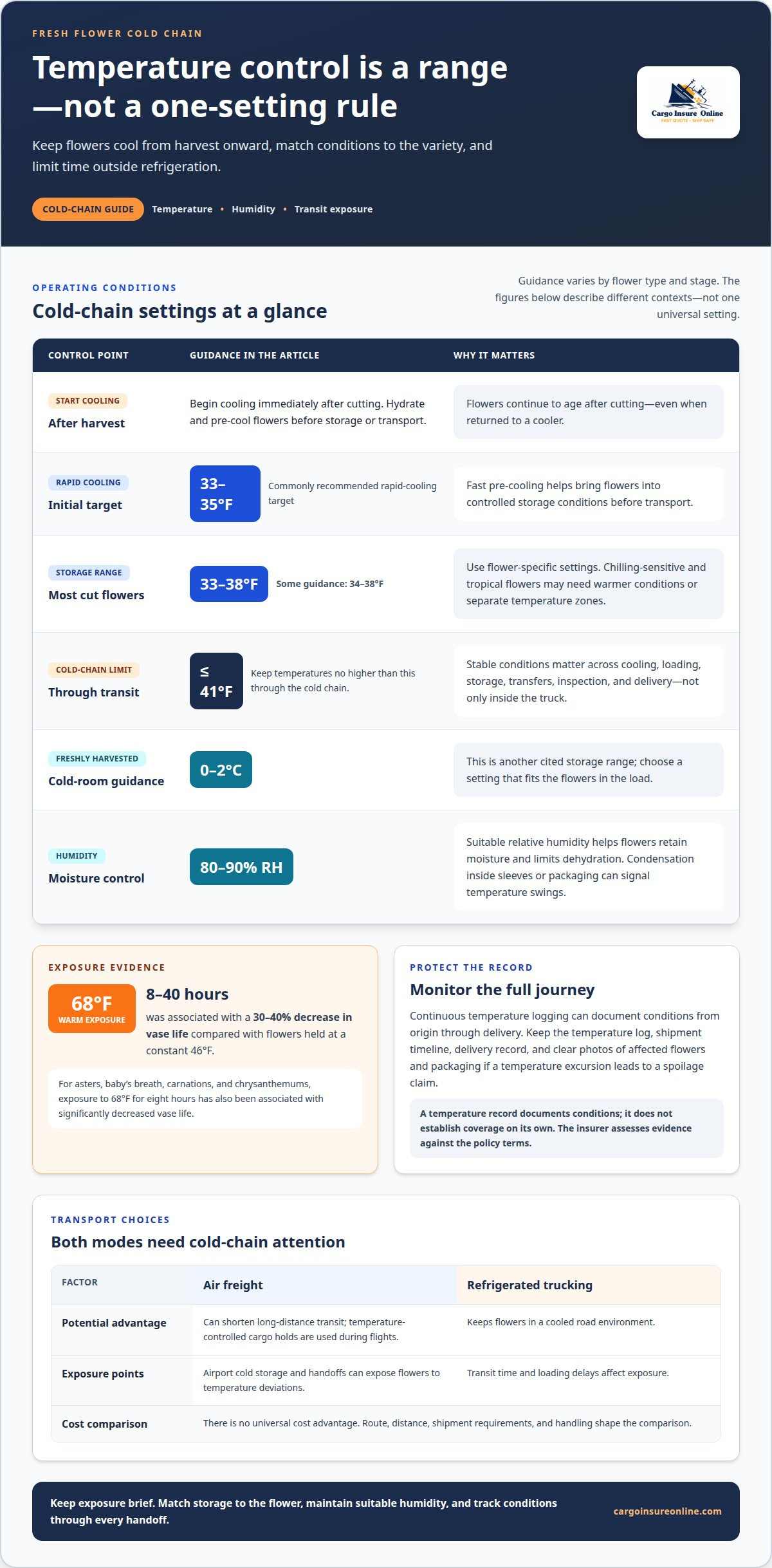
Cut flowers keep aging after harvest. Warm conditions raise respiration and water loss, while heat stress can reduce water uptake and increase sensitivity to ethylene. The result can be shorter vase life, even if flowers look acceptable when they arrive. For asters, baby’s breath, carnations, and chrysanthemums, exposure to 68°F for eight hours has been associated with significantly decreased vase life.
Cooling starts immediately after cutting, not when a shipment reaches a warehouse. Flowers are hydrated and pre-cooled before storage or transport, then kept in a stable temperature-controlled environment. A commonly recommended rapid-cooling target is 33-35°F, with temperatures kept no higher than 41°F through the cold chain. Some guidance gives 34-38°F for most cut flowers, while freshly harvested flowers may be stored in cold rooms set between 0 and 2°C.
These ranges reflect variation in flower needs, not a single setting for every load. Most varieties store best between 33°F and 38°F, but some chilling-sensitive flowers need slightly warmer conditions. Wholesalers may use separate temperature zones, placing tropical flowers in warmer designated coolers. Match the storage setting to the flower type, and avoid assuming one pallet temperature suits every variety.
Humidity matters alongside temperature. Relative humidity of 80-90% helps flowers retain moisture and limits dehydration. But temperature swings can create condensation inside sleeves or packaging, which may indicate the shipment has warmed and cooled. Monitor storage rooms, coolers, and transport conditions throughout the journey. Continuous temperature logging can create a record from origin through delivery.
Mode choice also shapes exposure. Air freight can shorten long-distance transit, but airport cold storage and handoffs can expose flowers to temperature deviations. Temperature-controlled cargo holds are used during flights. Refrigerated trucking keeps flowers in a cooled road environment, though transit time and loading delays affect exposure. Neither mode has a universal cost advantage: route, distance, shipment requirements, and handling all shape the comparison.
For a spoilage claim after a temperature excursion, preserve the temperature log, shipment timeline, delivery record, and clear photographs of the affected flowers and packaging. The insurer assesses evidence against the policy terms. A temperature record documents conditions, but does not establish coverage on its own.
Keep warm exposure brief. Flowers exposed to 68°F for 8 to 40 hours showed a 30-40% decrease in vase life compared with flowers held at a constant 46°F. Consistent temperature control, suitable humidity, and flower-specific storage settings give each shipment a stronger chance of arriving in saleable condition.
Refrigerated logistics and handling delays
Flower cold-chain logistics connects post-harvest care with storage, transport, transfers, and delivery. Every handoff creates a chance for flowers to wait outside refrigeration. A load may be properly cooled before departure, then lose valuable time during loading, sorting, or transfer between vehicles. Cold-chain management depends on the full route, not just the refrigerated truck.
International floral shipments may spend 24-72 hours in transit. That window can include airport handling, flight time, arrival procedures, and movement into refrigerated facilities. After arrival in the United States, flowers move directly into refrigerated import facilities for inspection and clearance. Delays between these stages add exposure, even when the next storage area is cooled.
Plan logistics around the flower’s path through each facility. Begin cooling soon after harvest, followed by hydration, pre-cooling, and protected storage. At collection, coordinate pickup with packing completion to reduce waiting. During transfers, keep pallets in refrigerated environments as much as possible. At delivery, move flowers promptly into the recipient’s cooler to limit further exposure.
Proper sanitation also supports cold-chain management. Clean buckets, storage rooms, and transport equipment help minimize bacterial and fungal development. Residue in a bucket, for example, can compromise water quality before flowers enter the vehicle. Process flowers promptly upon arrival to avoid unnecessary temperature exposure. Hydration and clean handling complement refrigeration; they do not replace it.
What are typical refrigerated freight costs for fresh flowers in the United States? There is no single typical rate. Quotes depend on factors such as route, distance, shipment size, refrigeration requirements, and handling needs. These details shape the transport plan and its cost, so a general figure would not reliably describe a particular shipment.
Transit time alone doesn’t show where a delay occurred. A shipment may move quickly between cities but wait during a transfer; another may take longer while remaining consistently refrigerated. Continuous temperature records, pickup and delivery times, and handoff records help show how the journey unfolded. Together, they give shippers a clearer view of where logistics can improve.
Review each stage: harvest, cooling, storage, loading, transfer, arrival, and processing. Look for recurring waits, such as pallets left at a loading area before collection or flowers sitting after arrival. Reducing those specific delays helps keep the cold chain connected and gives fresh flowers a better chance of arriving ready for prompt processing.
Cold-chain breaks and quality degradation
A cold-chain break interrupts the controlled conditions flowers need after harvest. Even after a pallet is cooled again, earlier exposure can continue to affect the flowers. Warm conditions increase respiration and water loss, while elevated temperatures can amplify ethylene production and sensitivity. These processes accelerate ageing across the supply chain, reducing the time flowers remain appealing after delivery.
Flowers transported without consistent temperature control can lose 15-20% of their vase life. The damage may show as petal drop, deteriorating leaf quality, and more discarded stems. A florist receiving roses with weak petals or damaged leaves may find fewer stems suitable for display. The flowers can look acceptable on arrival, yet degrade faster in a vase.
Timing matters as much as refrigeration itself. A cold-chain break late in the supply chain can be especially damaging. By then, flowers have already spent time in storage and transit, leaving less usable vase life for wholesalers, florists, and customers. A late disruption can affect saleability and customer experience when the shipment is closest to use.
Temperature fluctuations can cause condensation inside flower sleeves or packaging. Moisture on petals and leaves creates conditions favorable to fungal disease, including Botrytis. Condensation is a warning sign of temperature swings, not proof of a specific cause. Inspect the packaging and affected stems together; visible moisture, leaf deterioration, and petal damage help describe the shipment’s condition.
Cooling flowers after exposure helps manage conditions, but it cannot reverse ageing that has already occurred. Flowers exposed to room temperature or higher may continue generating heat through respiration after entering a cooler. That makes even a brief warm period relevant beyond the time spent outside refrigeration. Stable conditions throughout storage and transit help limit additional stress.
When degradation appears, document the shipment’s condition at receipt and keep a clear timeline. Note the affected flower types, visible symptoms, and any condensation inside sleeves. Compare these observations with available temperature records and handling times. This provides a more useful account of potential damage than a general description such as “flowers arrived warm.”
For wholesalers, a supply-chain review can connect visible outcomes to vulnerable stages. Check where temperature fluctuated, whether the issue affected a whole pallet or selected packages, and how quality changed after arrival. This distinction helps separate widespread exposure from localized handling damage. It also points to process improvements, such as reducing a late handoff or strengthening monitoring during storage.
Ventilated packaging and refrigerated pallets
Packaging and pallet arrangement shape how refrigerated air reaches fresh flowers. A refrigerated truck can maintain a set temperature, yet tightly packed cartons may restrict circulation around parts of the load. Keep the route from the refrigeration unit through the cargo space clear. Load placement matters: a blocked air path can create warm pockets even when the vehicle is operating.
Ventilation must work alongside packaging protection. Sleeves and cartons help limit physical damage during handling, but the arrangement should still let air circulate around the flowers. Avoid compressing blooms or placing packages where they obstruct airflow. For example, a pallet packed flush against an air outlet can disrupt temperature control for nearby cartons.
Treat refrigerated pallets as one connected load, not as isolated boxes. Align cartons consistently and keep the pallet stable during loading and transfer. Stability reduces shifting that can bruise petals or bend stems. Before departure, confirm the load is secured and the packaging hasn’t collapsed into gaps needed for airflow.
Do not rely on packaging to compensate for flowers that weren’t cooled before loading. Flowers need pre-cooling before storage and transport; a refrigerated vehicle is designed to maintain conditions, not quickly cool a warm, dense pallet. If flowers enter the load warm, respiration can continue generating heat after they are placed in a cooler. Cooling soon after harvest supports the rest of the journey.
Moisture needs attention, too. Relative humidity of 80-90% helps flowers retain moisture, while temperature fluctuations can cause condensation inside sleeves or packaging. That moisture can warn of swings during storage or transit. Inspect packaging at transfer points, especially if flowers arrive with wet sleeves, visible droplets, or damp carton surfaces.
Packaging decisions also need to reflect flower type. Tropical flowers may require warmer storage than other varieties, so a mixed pallet can complicate temperature control. Separate temperature-sensitive loads where possible, and avoid treating one setting as optimal for every flower. Roses, lilies, and tropical varieties may have different storage needs.
At each handoff, inspect the pallet before it moves onward. Look for crushed cartons, shifted stacks, blocked air paths, and condensation. Record the condition alongside temperature readings and transfer times. This connects visible packaging damage with the shipment timeline, rather than leaving the cause unclear after delivery.
Ventilated packaging cannot prevent every cold-chain break, but thoughtful packing reduces avoidable obstacles. Keep cartons stable, maintain clear airflow, and match storage conditions to the flowers inside. These details help refrigerated pallets deliver flowers with less handling damage and more consistent conditions from origin to destination.
How does cold-chain duration affect fresh flower vase life and shelf life?
Cold-chain duration matters because cut flowers continue to respire and age after harvest. The clock starts at cutting, not at truck pickup or airport departure. A shipment that waits before cooling has already used part of its potential vase life. For example, two rose lots on the same route can arrive in different condition if one was cooled later.
Transit time alone doesn’t determine freshness. Temperature history, hydration, flower variety, handling, and time outside refrigeration all shape the result. A longer journey under stable conditions can preserve quality better than a shorter trip with repeated temperature swings. Reviewing fresh flower cold chain, transit insurance, and shelf-life degradation together helps distinguish quality controls from financial risk management.
Roses and lilies can stay fresh for up to two weeks under suitable transport conditions. That is not a fixed shelf-life promise for every shipment. Variety, maturity at harvest, hydration, and transit exposure affect usable life. A florist receiving flowers close to their intended sale date also has less time for display and customer use.
Temperature fluctuations can consume vase life quickly. A rose held consistently at 35°F may last 7-10 days longer than the same rose exposed to repeated temperature changes during transport. This example shows why one arrival reading doesn’t describe the whole journey. Continuous temperature records reveal whether flowers experienced stable conditions or repeated warming and cooling.
Duration also changes the importance of each handoff. A delay before departure adds to the flowers’ time in the supply chain, while a late delay leaves less time before sale. Prompt processing after arrival helps avoid further exposure. Hydration and clean handling support flower quality, but cannot reverse ageing that already occurred during transit.
For planning, define shipment duration from harvest through delivery, then map each storage and transfer stage. Compare that timeline with temperature records and flower type. A mixed shipment containing roses and chilling-sensitive tropical flowers needs particular attention because their storage requirements differ. This fresh flower cold chain, transit insurance, and shelf-life degradation review considers the whole load, not only the carrier’s travel time.
Freshness at delivery is only one checkpoint. Track how flowers open, retain leaf quality, and hold their petals after reaching the florist. These observations help connect transit conditions with usable vase life. A shipment that arrives looking sound but deteriorates quickly deserves a closer review of when cooling began, temperature history, hydration, and handling delays.
Cargo Insure Online
Cargo Insure Online helps businesses manage cargo-related financial risk while fresh flowers move through the supply chain. Refrigeration and careful handling protect quality, but cannot remove every transit risk. Insurance addresses a separate part of the plan, and policy terms determine what losses may be covered.
For flower shipments, the transport mode helps guide the relevant option: Air Freight Insurance, Sea Freight Insurance, or Trucking Insurance. GAP Insurance may also help address a difference between cargo value and another applicable recovery. Keep shipment details and condition records organized to support a clear review of any loss.
Contact Cargo Insure Online to discuss insurance for your flower shipments.
Build a stronger plan for your next shipment
Protecting flower quality and managing financial exposure are related, but they solve different problems. A practical plan for fresh flower cold chain transit insurance and shelf-life degradation starts by mapping the shipment’s route, transport mode, and handoffs. This makes it easier to consider operational controls alongside cargo coverage, without treating insurance as a substitute for careful temperature management.
Choose coverage based on how the flowers travel. Cargo Insure Online offers Air Freight Insurance, Sea Freight Insurance, and Trucking Insurance for different transport modes. Policy terms determine what losses may be covered, so connect the shipment details with the protection you’re considering.
Give your next shipment a clearer risk plan. Contact Cargo Insure Online today to discuss cargo insurance for your flower transit. A more deliberate plan can help you move forward with greater clarity.
Frequently Asked Questions
How to avoid cold chain breaks?
Keep flowers in controlled conditions through every handoff, from harvest to florist delivery. Coordinate cooling, packing, collection, transfers, and receiving so pallets don’t wait unnecessarily between refrigerated spaces. Use continuous temperature logging to spot interruptions along the route, then compare the record with handling times. Clean equipment and prompt processing matter too: refrigeration works best alongside hydration and sanitation, not as a stand-alone safeguard.
Does temperature affect ethylene damage?
Yes. Higher temperatures can increase ethylene production and make flowers more sensitive to its effects. This can compound other heat-related stress, including faster respiration and reduced water uptake. If a shipment experiences a warm period, review the temperature record alongside flower condition after arrival. That context helps explain why blooms may age unevenly, even when some stems in the same shipment still appear fresh.
How can I tell if flowers have experienced temperature fluctuations?
Condensation inside sleeves or packaging can warn of temperature swings during storage or transit. It isn’t proof on its own, so compare packaging condition with available temperature logs and the delivery timeline. Look for related changes, such as petal drop or deteriorating leaves, and record which packages show them. Comparing affected and unaffected cartons can help identify whether the issue was widespread or localized.
How much fluctuation is too much?
There isn’t one temperature-change threshold that applies to every flower variety and shipment. The effect depends on the flower’s temperature needs, exposure duration, and conditions before and afterward. Compare the full temperature record with the intended storage conditions for that variety, rather than relying only on the temperature at delivery. A short excursion and repeated swings may affect flowers differently.
Is temperature control alone enough?
No. Temperature control needs support from hydration, clean handling, suitable packaging, and timely processing. A clean, cooled load can still face quality problems if flowers are dehydrated or cartons are crushed during transfer. Packaging should protect stems while allowing refrigerated air to circulate. Reviewing these factors together gives a more complete picture of shipment condition than temperature data alone.
How does the cold chain work from farm to florist?
The chain begins after harvest, with hydration and cooling, then continues through storage, packing, transport, transfers, and delivery. At each stage, flowers move between people and facilities, so handoffs need to preserve controlled conditions. After arrival, prompt processing and refrigerated storage help limit further exposure before flowers reach a florist. Temperature records and a shipment timeline connect conditions across these stages.
What temperatures do different flower types require?
Storage temperatures vary by flower type. Most cut flowers suit cool storage, while tropical varieties and other chilling-sensitive flowers may need warmer conditions. Wholesalers may use separate temperature zones to account for these differences. For mixed shipments, consider each flower’s needs; one setting may not suit every stem. Keep variety information connected to the load plan and temperature records.
What temperature and humidity ranges preserve fresh cut flowers during transit?
A commonly recommended range for many cut flowers is 34-38°F (1-3°C), with relative humidity around 80-90% to help limit moisture loss. These are general targets, not a universal setting for every variety. Some flowers need warmer storage. Keep the load’s flower types in mind, and use temperature records to understand conditions throughout transit rather than relying on one reading at arrival.


