

Heavy weather can turn a secured load into a cargo claim. A rough sea, heavy weather cargo shifting container damage claim may involve broken strapping, collapsed stacks, water damage, or goods lost overboard. Common cargo claims involve physical damage, water damage, and cargo lost at sea, and rough conditions can overwhelm even adequate lashings.
It is not always clear whether damage resulted from shifting cargo, water ingress, or another part of the voyage. Clear records help establish what happened and support a claim. For non-apparent cargo damage, notice should be given within three days, according to the International Maritime Organization. This guide explains how heavy weather can move cargo, what damage claims commonly involve, and what evidence can document a loss. It also covers key notice and filing deadlines, helping you move from the first signs of damage to the next claim steps with greater clarity.
Key Takeaways
- Broken straps and shifted stacks can point to stowage or securing issues, so the cargo’s condition and arrangement matter when assessing a claim.
- Photographs, vessel logs, weather reports, course records, and maintenance documents can help build a clearer account of what happened.
- Act promptly when damage is found, and track notice and filing deadlines against the applicable transport documents and terms.
- Heavy weather has no single definition for every contract; the wording of the bill of lading or shipping contract shapes how it is assessed.
- Sea Freight Insurance can help address cargo risks during ocean transport; the policy terms determine the applicable cover.
Broken strapping and collapsed cargo stacks
Broken strapping can be the visible sign of a deeper stowage failure. In one heavy-weather incident, seven stacks of metal beams collapsed or shifted aboard a vessel. Three more stacks moved to a lesser degree. Each stack weighed over 9000 kg and measured 4.5 m long, 1.7 m wide, and 1.9 m high. The cargo was carried directly on deck using only two wooden blocks that formed part of each stack.
The vessel was travelling at 16 knots when the shifting occurred. Winds reached Force 5-6, with swells rated 5/6. The vessel had at least two days’ warning of the impending heavy weather, and lashings were checked daily after departure and tightened as required. Those facts help frame the claim, but they don’t alone explain why the stacks moved. The loading and lashing did not comply with the Code of Safe Practice for Cargo Stowage and Securing for that cargo. That makes the stowage arrangement and securing method central issues.
When stacks collapse, damage can extend beyond broken straps. Beams may strike nearby cargo, deform supports, or hit the vessel’s structure. A resulting claim may involve physical damage, cargo loss, and questions about how the load was prepared and secured. Condensation can also damage steel products during a voyage, so evidence should distinguish moisture effects from impact or abrasion where possible. A container claim may involve shifted contents even when the container itself appears intact.
For a clear incident record, connect each visible condition to its location and cargo unit:
- Photograph broken straps, displaced beams, damaged packaging, and the surrounding stowage before anything is moved.
- Record which stacks collapsed and which three stacks shifted less, keeping those groups distinct.
- Note the two wooden blocks beneath the stacks and document any visible movement or damage around them.
- Preserve available loading, lashing, and daily inspection records, including any recorded tightening after departure.
- Keep the voyage details together, including the 16-knot transit, Force 5-6 winds, and rated 5/6 swells.
These details help assess whether heavy seas exceeded the securing arrangement’s capacity or inadequate stowage contributed. Under the Anglo-Australian approach, the peril-of-the-sea defence requires a fortuitous or unexpected element in the circumstances causing the loss. It is unavailable if unseaworthiness or carrier negligence in cargo care contributed to the damage. In a shifting-stack claim, the sequence of loading, securing, inspection, weather, and movement matters as much as the final damage photographs.
Cargo claim documentation
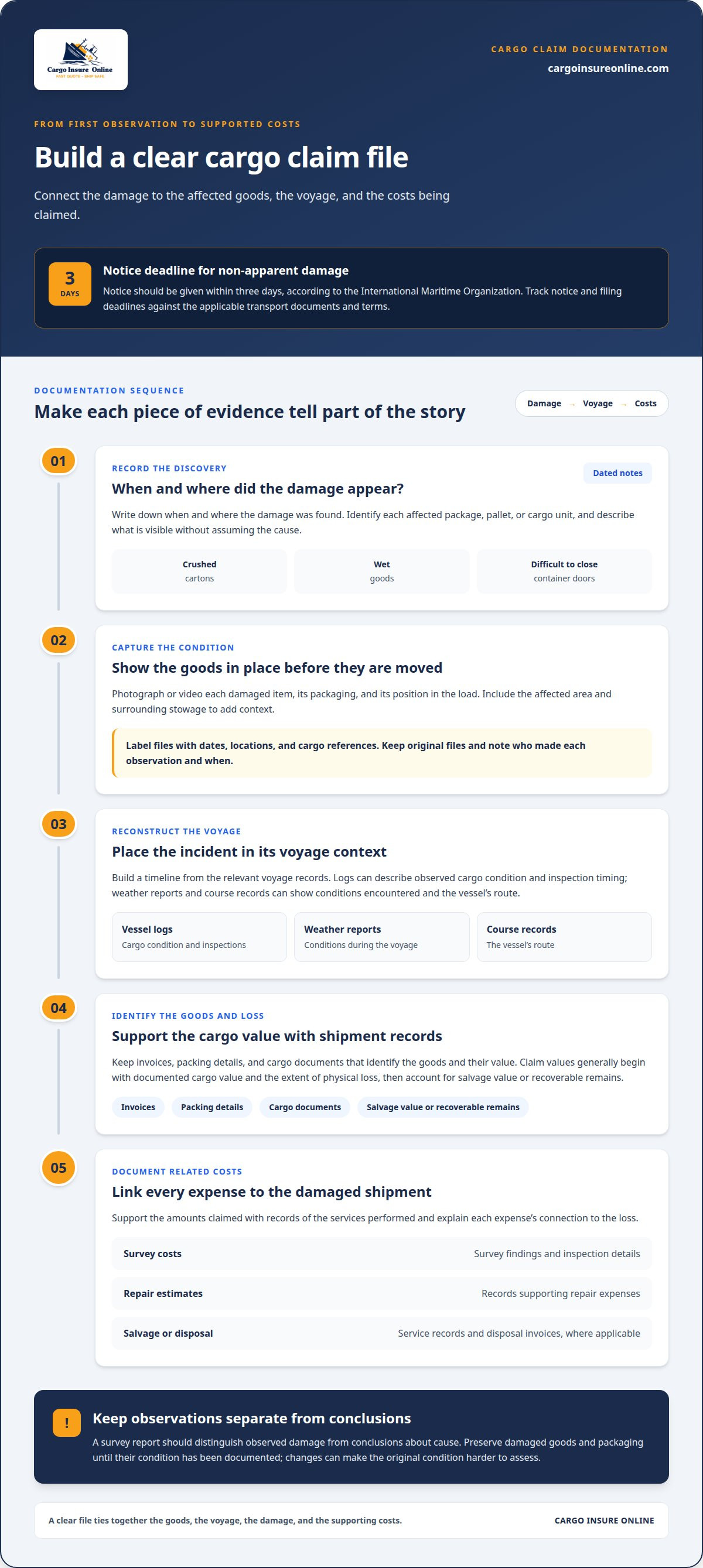
A strong cargo file connects the damage to the voyage, affected goods, and costs claimed. Start with a dated record of when and where the damage appeared. Identify each affected package, pallet, or cargo unit, then describe the visible damage without assuming its cause. For example, note whether cartons are crushed, goods are wet, or container doors are difficult to close. Keep the original shipping and cargo records with these observations.
Build a timeline from voyage documents. Deck logs, weather reports, and course records can show the conditions encountered and the vessel’s route. After heavy weather, crews should record any damage, or its absence, to the vessel and cargo in vessel logs. Photographs and video add context, especially when they show the affected area before cargo is moved. Label files with dates, locations, and cargo references. This makes a rough-sea, heavy-weather cargo-shifting container-damage claim easier to follow.
Useful records may include:
- Photographs of each damaged item, its packaging, and its position in the load.
- Vessel logs describing observed cargo condition and inspection timing.
- Weather reports and course records covering the relevant voyage period.
- Maintenance records relevant to vessel seaworthiness before departure.
- Invoices, packing details, and cargo documents identifying the goods and their value.
- Survey findings, repair estimates, salvage records, and disposal invoices, where applicable.
For a heavy-weather defence, detailed evidence of due diligence matters. Maintenance records can help show what was done to make the vessel seaworthy before the voyage. Photos or video of conditions, considered alongside logs and course records, can help explain the carrier’s account. Keep original files and maintain a clear record of who made each observation and when. This context can help clarify a rough-sea, heavy-weather cargo-shifting container-damage claim.
Claim values generally begin with documented cargo value and the extent of physical loss, then account for salvage value or recoverable remains. Survey costs depend on the inspection required, while salvage or disposal expenses should be supported by records of the services performed. In each case, invoices, survey reports, and evidence linking the expense to the damaged shipment help substantiate the amount claimed.
Keep a separate expense record. Match each invoice to the shipment and explain its connection to inspection, recovery, repair, or disposal. Don’t discard damaged goods or packaging before documenting them; changes can make the original condition harder to assess. A survey report should distinguish observed damage from conclusions about cause, keeping the claim file clear. For online orders moving through the supply chain, consider cargo shipment protection when planning for cargo risks.
Cargo claim time limits
Separate the first damage notice from the deadline for filing a cargo claim. They serve different purposes, and missing either can complicate recovery. For non-apparent cargo damage, notice should be given within three days, according to the International Maritime Organization. The Hague-Visby Rules generally require most cargo claims to be filed within one year of delivery, while charter party terms may specify different periods.
Start a timeline as soon as damage is discovered. Record the delivery date, when the damage became apparent, and when notice was sent. Keep evidence of the notice and its receipt, along with transport documents identifying the shipment. For example, if a concealed wet patch appears after unpacking, record its discovery date separately from the delivery date. These dates help distinguish discovery and notification from the later claim-filing deadline.
Act quickly during discharge. A practical guide recommends action within the first 24-48 hours after cargo damage is discovered. Use that window to record the condition, identify affected goods, and send notice through the channel required by the applicable documents. This prompt response can preserve a clearer record, especially if cargo is being moved, sorted, or delivered onward. Don’t wait for a final loss calculation before documenting the initial damage.
Keep three time points visible in the claim file:
- Discovery: record when the damage was first observed, including whether it appeared during discharge or unpacking.
- Notice: save the date, recipient, shipment reference, and proof that the damage notice was sent.
- Filing: note the delivery date and the deadline that applies under the relevant contract and transport terms.
These entries help avoid a common mix-up: sending notice does not mean a formal claim has been filed. Under the Hague-Visby Rules, the one-year period concerns filing most cargo claims after delivery. A charter party may set a different period, so the governing contract matters. Review the bill of lading and related contract terms together rather than assuming one deadline applies to every document or shipment.
For a container damaged by shifting in rough seas, the initial report might describe a dented container and wet cartons found during discharge. Update the file as inspection clarifies which goods are affected, but preserve the original discovery record. Keep dated copies of notices, delivery documents, survey findings, and correspondence together in one claim file. Clear dates make it easier to track notice and filing separately and act before the applicable deadline passes.
Cargo shifting during heavy weather
Heavy seas can push cargo beyond what its securing arrangements can withstand. A claim depends on the movement, its cause, and the applicable contract terms.
Liability for Weather-Related Cargo Damage
Liability depends on why the cargo shifted and which party’s actions contributed to the damage. Heavy weather alone does not establish whether stowage, lashing, vessel condition, or cargo care played a role.
That distinction matters because, under the Anglo-Australian approach, a peril-of-the-sea defence requires a fortuitous or unexpected element in the circumstances causing the loss. The defence is unavailable if unseaworthiness or carrier negligence in cargo care contributed to the damage. For example, evidence of inadequate securing can change how a storm-related loss is assessed.
Voyage evidence helps connect conditions to damage. Deck logs, course records, weather reports, and cargo observations can show what happened and when. The vessel’s response also matters: course and speed should be adjusted as necessary to reduce risks to the vessel and cargo.
Rules and Bill of Lading Terms
The Hague-Visby Rules, U.S. COGSA, and bill of lading terms shape the legal and contractual framework for a heavy-weather cargo claim. The provisions that apply depend on the governing transport arrangements and shipment documents.
Read the bill of lading alongside the relevant contract. Its terms can affect how responsibilities and claim procedures are assessed, while applicable rules provide a separate framework. Do not assume that mentioning Hague-Visby or U.S. COGSA alone resolves liability. The documented route, transport terms, cause of loss, and evidence of cargo care all inform the analysis.
For instance, a container arriving with shifted cartons may show physical damage, but that alone does not establish why the cargo moved. Compare the damage record with loading details, voyage conditions, and contract documents. Keep these records connected to the affected shipment.
Insurance Cover and Exclusions
Cargo insurance responds according to the policy wording, which defines covered risks, conditions, and exclusions. Assess rough seas, shifting cargo, and container damage against those terms, rather than treating them as automatically covered or excluded.
Separate the event from the resulting damage. A storm may coincide with broken securing or water entering a container, but policy wording determines how those circumstances affect cover. The cause, cargo condition, and evidence can all matter. For example, photographs showing displaced goods and container damage help describe the loss, but do not replace the policy terms.
Review the insured shipment details alongside the wording on covered events and exclusions. A claim involving wet cartons may raise different factual questions from one involving crushed goods after cargo shifted. Clear descriptions help connect each claimed loss to the relevant policy language.
What counts as heavy weather under cargo shipping contracts and bills of lading?
There is no single weather description in the available facts that defines “heavy weather” for every cargo contract. The bill of lading and related shipping terms matter, while voyage conditions and the vessel’s response help explain what happened. A weather label alone does not show whether cargo damage resulted from sea conditions or another cause.
Read the bill of lading alongside any contract terms governing the shipment. Look for how the documents describe weather events, carrier responsibilities, and cargo care. Do not assume a phrase has the same effect for every shipment. The relevant wording, route, cargo, and evidence all shape the assessment of a rough-weather event.
Weather evidence needs context. Forecasts from multiple sources can show what operators could anticipate, while deck logs and course records can help establish the conditions encountered. The vessel’s course and speed adjustments also matter because operators should change them as necessary to reduce risks to the vessel and cargo. Together, these records provide a clearer timeline than a brief entry describing the weather as severe.
For a useful assessment, connect the weather record to what happened to the load:
- Compare forecasts with recorded conditions and the vessel’s route during the relevant period.
- Review whether course or speed changed as conditions developed.
- Match the timing of cargo movement or damage with vessel logs and inspection records.
- Consider whether the cargo was breakbulk or project cargo, which can shift during heavy weather even with adequate lashing.
- Separate evidence of sea conditions from evidence about stowage, securing, and cargo care.
That distinction matters because severe rolling or pitching can create forces beyond the capacity of cargo securing arrangements. Inadequate lashing or poor stowage planning can also contribute to movement and damage. Rough seas alone therefore do not establish the cause of a loss. A stronger claim file sets out the weather, vessel response, cargo condition, and securing evidence as connected but distinct facts.
For example, if cargo shifts during a storm, record when the movement was first observed, the conditions around that time, and any relevant changes in course or speed. The bill of lading provides the contractual context, while voyage and cargo records detail the event. Read together, they help explain whether the reported conditions fit the contract wording and how the damage occurred.
After heavy weather, crews should assess cargo condition and check for water in cargo holds. These observations can help distinguish shifted cargo from water-related damage. Keep the timing clear: a log entry made after inspection answers a different question from a forecast issued before conditions developed. This distinction makes the weather description more useful in a cargo claim.
Cargo Insure Online
Cargo Insure Online helps businesses insure goods moving through international supply chains. When rough weather, shifting cargo, or container damage is a concern, its Sea Freight Insurance is relevant to ocean shipments. For goods sold online, E-Commerce Cargo Insurance may suit the supply-chain context. The applicable policy wording sets out the cover, conditions, and exclusions, so match the insurance to the shipment and its transport needs.
Clear cargo records can also help explain what happened if damage occurs. Bring together shipment details, damage evidence, and relevant transport documents when considering your coverage needs. For a conversation about cargo protection, contact Cargo Insure Online.
Build your cargo plan before the next voyage
A rough-sea, heavy-weather cargo-shifting container-damage claim is easier to manage when risk planning starts before goods move. Consider how your cargo travels, where responsibility changes, and which insurance terms apply to the shipment. This preparation gives you a clearer basis for decisions when conditions disrupt a voyage.
Cargo Insure Online offers Air Freight Insurance, Sea Freight Insurance, and Trucking Insurance. The right starting point depends on the transport mode and the cargo risks you need to address. Review those needs alongside your shipping arrangements, then choose a practical next step.
Ready to discuss cargo protection for your supply chain? Explore options with Cargo Insure Online. A clear plan today can help you move forward with greater confidence on the next shipment.
Frequently Asked Questions
What are the most common cargo claims?
Common cargo claims involve physical damage, water damage, and cargo lost overboard. Claim patterns can also depend on cargo type. Bulk cargo disputes often involve shortage or contamination, while breakbulk claims commonly focus on physical damage during handling. For example, a shortage claim needs records showing the quantity shipped and received, while a damaged breakbulk item calls for evidence of its condition and handling.
What should a charterer do immediately when cargo damage is discovered during discharge?
Record the damage promptly, notify the relevant parties, and preserve the evidence before the cargo is moved or altered. A practical guide recommends action within the first 24-48 hours after discovery. Identify affected cargo units, note where they were found, and take dated photographs. Keep discharge records and communications together so the timeline remains clear as inspection and assessment continue.
What was the cause?
In the metal-beam stack incident, the cargo was not loaded or lashed in accordance with the Code of Safe Practice for Cargo Stowage and Securing for that cargo. Heavy seas coincided with the stacks shifting, but the securing and support arrangement were central to explaining the movement. The incident shows why a storm alone may not account for cargo damage.
How does rough sea cause container movement, cargo shifting, and container damage?
Severe rolling or pitching can create forces that exceed cargo securing arrangements, allowing goods to move inside a container. The container may also shift or strike nearby structures as the vessel moves. For example, unsecured cartons can collapse against a container wall, while heavier cargo may damage other goods or the container interior. The resulting damage depends on the movement and the load’s restraint.
What evidence is needed to support a cargo shifting or container damage claim?
Build evidence connecting the shipment, observed damage, and voyage conditions. Useful items include dated photographs, cargo and delivery documents, vessel logs, weather reports, course records, and relevant survey findings. A cargo-unit map showing where affected packages sat inside the container can also help. Preserve original images and inspection records, then connect each file to the shipment reference and discovery date.
What are the deadlines for notifying carriers and filing cargo damage claims in the United States?
Deadlines depend on the rules and contract terms governing the shipment. Under the Hague-Visby Rules, most claims must be filed within one year of delivery, though charter party terms may specify a different period. For a U.S.-related shipment, identify the governing terms rather than assuming one deadline applies to every claim.
Does a carrier’s heavy weather defense apply if cargo was improperly stowed or secured?
Not automatically. Under the Anglo-Australian approach, a peril-of-the-sea defence requires a fortuitous or unexpected element in the circumstances causing the loss. It is unavailable if unseaworthiness or carrier negligence in cargo care contributed to the damage. Evidence about loading, securing, vessel condition, and weather helps show whether heavy seas alone explain the loss.
What steps should a shipper take after discovering cargo damage at delivery?
Note the damage on delivery records, photograph affected goods and packaging, and notify the carrier promptly. Keep damaged items separate where practical, and avoid discarding packaging before documenting it. Record when and where each issue appeared, especially if concealed damage emerges during unpacking. Keep delivery paperwork, shipment references, and communications together to support later inspection and claim handling.


