
A carrier’s liability limit can look reassuring until a high-value shipment is lost or damaged and the recovery falls far short of its commercial value. To insure high-value freight with fewer surprises, start with the shipment’s exposure, not just the carrier’s certificate.
The party moving your goods may have some responsibility for loss or damage, but carrier liability and cargo insurance are different. Coverage can depend on the goods’ value, route, transport mode, policy terms, and shipment records. Those details matter whether freight travels by air, sea, or road.
This guide explains how to assess what’s at stake, compare coverage needs, and prepare records before shipping. You’ll learn what to review in valuation terms, limits, exclusions, transport documents, and security requirements, and how shipment-specific risks shape a coverage decision. The goal is to spot potential gaps between a shipment’s value and its protection before freight is on the move.
Key Takeaways
- Map more than cargo value: route, transport mode, handling, and potential delay all shape shipment exposure.
- To insure high-value freight with confidence, compare the policy’s valuation basis, covered causes, exclusions, deductibles, and limits.
- Separate the roles of cargo insurance, carrier liability, and security controls to identify where protection may fall short.
- Build a pre-shipment record set with cargo details, invoices, packing information, instructions, and condition records.
- Match your coverage review to the journey, whether freight moves by air, sea, or truck.
Insure High-Value Freight by Mapping the Shipment’s Exposure First
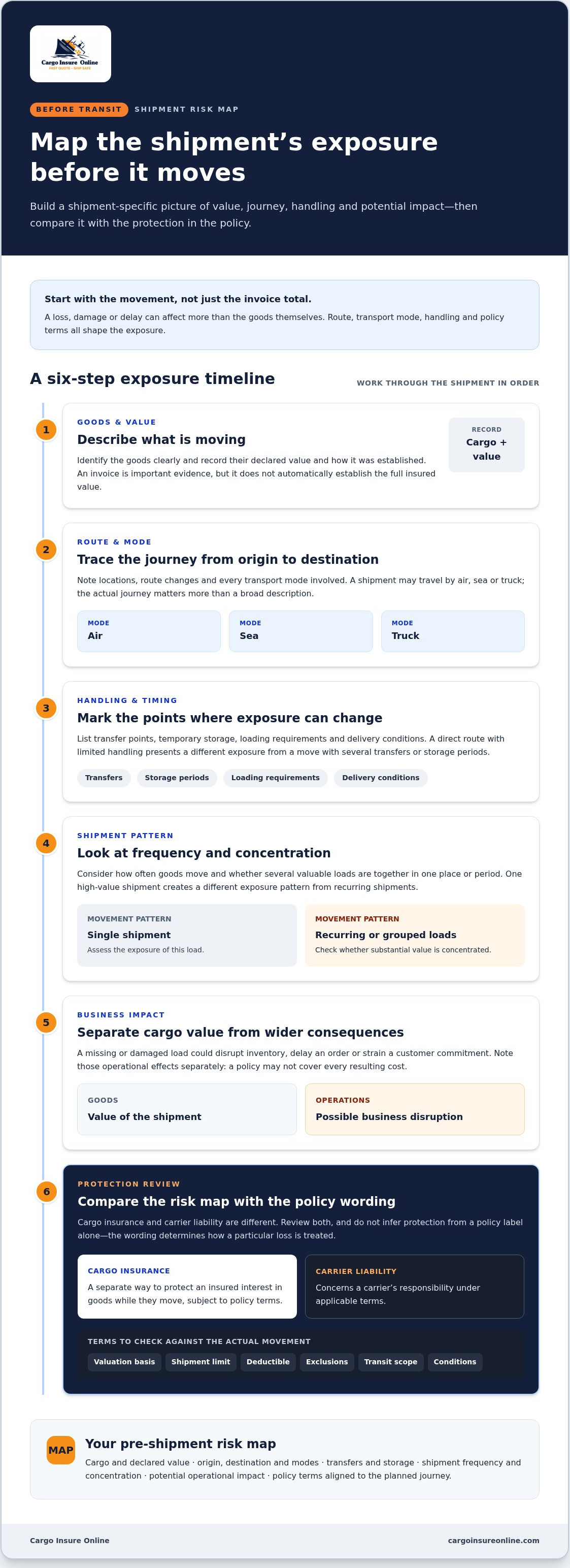
Before you insure high-value freight, look beyond the invoice total. A shipment’s exposure includes the financial effect of loss, damage, or delay, along with the route and handling steps that may affect its safe arrival. A missing shipment might mean more than replacing goods: it could disrupt inventory, delay an order, or strain a customer commitment.
High-value freight insurance is coverage intended to protect a shipper’s financial interest in goods while they move through transit, subject to the policy’s terms. That’s a useful starting point, not a promise that every cause of loss or business impact is covered. Cargo insurance offers a general introduction to the concept, while the policy wording defines the protection for a specific shipment.
Keep cargo insurance distinct from carrier liability. Liability concerns a carrier’s responsibility under applicable terms; cargo insurance is a separate way to protect an insured interest. Reviewing both helps show where a potential loss could exceed the protection you expect.
Which shipment details shape the risk?
Build a shipment profile before comparing coverage. Record the goods and their declared value, origin and destination, and whether they travel by air, sea, or truck. Then map the journey between those points. A direct route with limited handling presents a different exposure from a move with several transfers, temporary storage, or special delivery instructions.
- Cargo and value: Identify the goods clearly and record how their declared value is established.
- Route and mode: Note locations, transport modes, and route changes that could affect transit risk.
- Handling and timing: List transfer points, storage periods, loading requirements, and delivery conditions.
- Shipment pattern: Consider how often goods move and whether several shipments concentrate substantial value in one place or period.
Frequency matters. One high-value shipment creates a different exposure pattern from recurring shipments, while several valuable loads moving together can concentrate risk. Describe the actual movement rather than relying on broad labels such as “electronics” or “fragile goods.”
Why high value needs a shipment-specific view
One damaged or missing load can leave shelves empty, delay a customer order, or force a business to find replacement stock quickly. Include these operational consequences in your exposure assessment, even though a policy may not cover every resulting cost. Separate the value of the goods from the wider business impact, then review each against the coverage terms.
A general assumption about cargo coverage can miss important differences between shipments. Goods, routes, handling stages, and delivery requirements vary, and so can the terms that apply. Review the policy’s scope, limits, exclusions, valuation basis, and any conditions relevant to the planned movement. Don’t infer protection from a policy label alone. The wording determines whether a particular loss is covered and how the insured amount is assessed.
The result is a practical risk map: what is moving, what could go wrong, where exposure builds, and which details need closer review before the shipment departs.
How High-Value Freight Insurance Responds to Loss, Damage, and Transit Risk
To insure high-value freight effectively, connect the shipment’s declared value to the financial interest being protected and the terms that determine how a covered loss is assessed. An invoice is an important record, but it doesn’t automatically establish the full insured value. Depending on the policy, the valuation basis may include other eligible components. Don’t assume a universal formula: review how the policy defines value and what evidence supports it.
Policy wording, not a coverage label, determines whether a particular loss is covered and how the policy responds. A policy described as “all-risk” still has terms, conditions, exclusions, limits, and deductibles. The phrase alone doesn’t mean every cause of loss is included. Damage during transit and delay, for example, may be treated differently, and a specific cause could be excluded or subject to a condition. Read the wording against the shipment’s route and handling plan.
How shipment value and insurance limits relate
The commercial invoice records the transaction value; the policy may define insured value differently or allow additional components under its terms. Check which value is declared, how it is supported, and how it compares with the applicable limit. If the declared amount is lower than the value recognized under the policy’s rules, a covered loss could still leave a gap. Don’t add assumed costs or use a blanket formula. Confirm the policy-specific basis and keep supporting records aligned.
Which coverage terms deserve a close read?
Review the limit for the shipment, deductible, exclusions, and stated transit scope, including when protection begins and ends. Then look for conditions tied to packaging, security measures, or reporting. Compare these details with how the freight will actually be packed, moved, stored, and delivered. If an instruction or shipment detail changes, keep the coverage information and records consistent with the revised plan.
- Limits: Check the maximum that applies and whether it matches the insured value.
- Deductibles: Understand the amount that may remain your responsibility after a covered loss.
- Exclusions and conditions: Identify causes or circumstances that may affect coverage.
- Transit scope: Review covered movement stages, including any stated storage or transfer terms.
Use this review to turn policy language into a practical checklist for the shipment, rather than relying on the product name. For freight moving by air, sea, or truck, explore Cargo Insure Online coverage options as you consider which specialized coverage fits the movement.
Compare High-Value Freight Insurance with Security and Carrier Liability
These protections work together, but they don’t do the same job. Cargo insurance can protect an insured financial interest under policy terms. Carrier liability concerns a carrier’s responsibility under applicable law and contract. Security measures help manage exposure before and during transit. Separating these roles makes it easier to see what each can and can’t do for a shipment.
| Protection | Primary role | What to understand |
|---|---|---|
| Cargo insurance | Financial protection for an insured interest after a covered loss. | Policy terms determine covered causes, limits, exclusions, deductibles, and valuation. |
| Carrier liability | Addresses a carrier’s responsibility for loss or damage. | Responsibility and recovery depend on applicable terms; liability shouldn’t be assumed to equal the cargo’s full value. |
| Operational security | Helps prevent, deter, or improve visibility into transit risks. | Tracking, routing, and inspections can support oversight, but don’t provide financial indemnity. |
Insurance versus carrier liability
A carrier’s liability and a shipper’s insurance may address different financial interests and operate under different terms. A carrier’s responsibility can depend on the circumstances and the agreement governing the move. Even if a carrier may be liable, recovery may not match the goods’ full commercial value. Treat liability as one part of the risk picture, not a substitute for reviewing cargo insurance terms against the shipment’s value and exposure.
The transport mode also matters to your review. For air movements, consider the route, handling points, and transit details alongside the policy scope. This air freight insurance overview can add mode-specific context as you compare those details.
Insurance versus freight security measures
Security controls aim to reduce exposure or make a shipment easier to monitor. They don’t transfer financial risk in the way insurance may, and they can’t guarantee that loss won’t occur. Use them as practical complements, not replacements.
- Tracking: Provides shipment visibility and may help flag route or timing changes.
- Controlled routing: Keeps movement aligned with planned routes and handling instructions.
- Inspections: Create opportunities to identify visible damage or discrepancies at handoff points.
For example, a tracking alert may reveal an unexpected stop, while an inspection may document a damaged package at delivery. Neither action alone establishes insurance coverage or guarantees recovery. Keep records of the controls used and review any policy conditions related to security, packaging, or reporting.
Road freight brings its own movement and handling considerations. Reviewing trucking cargo insurance can help frame those mode-specific questions. A stronger plan pairs suitable coverage with clear procedures, so you can insure high-value freight while managing risk before, during, and after transit.
Prepare a High-Value Freight Insurance Checklist Before Shipping
Good records make a shipment easier to identify, assess, and document if something goes wrong. Before you insure high-value freight, create one file for the move and make sure its details match the cargo, transport plan, and shipment documents. A clear record trail connects the insured goods to the journey they actually took.
What information to organize before transit
Start with a shipment profile. Record what is moving, its declared value, origin, destination, and planned transport modes. Add handling details that could matter, such as transfers, temporary storage, special packaging, delivery instructions, or agreed security arrangements. Keep the information current if the route or handoff plan changes.
Gather supporting records in one accessible place. Use a consistent shipment reference across documents so each item can be matched to the correct load.
- Identify the cargo: Record a clear commodity description, quantity, packaging details, and relevant shipment identifiers.
- Document the value: Keep the commercial invoice and records that support the declared amount.
- Map the movement: Note the origin, destination, transport modes, planned route, transfers, and storage stages.
- Collect the paperwork: File the packing list, transport document, shipment instructions, and available condition records together.
- Track handoffs: Record relevant pickup, transfer, storage, and delivery details so the timeline stays clear.
Condition records are especially useful when they show the goods and packaging before dispatch. Keep available inspection notes or images with the shipment file, and preserve delivery records or exception notes as they’re created. These materials help establish what was observed at different points, but they don’t determine on their own whether a loss is covered.
What to do if a shipment is lost or damaged
Act promptly and keep the response organized. Take reasonable steps to prevent further damage where it’s safe and practical, and preserve the goods and packaging for review when possible. Avoid discarding or altering relevant materials before documenting their condition.
Capture the details while they’re fresh. Record when and where the issue was discovered, note visible damage or missing items, and keep relevant transport records, delivery exceptions, and communications. Photos can help document the condition, but keep them with written notes and shipment identifiers so the evidence connects to the correct load.
Follow the policy’s notice, reporting, and claim-submission instructions. Note any stated timeframes and required documents, then keep copies of what you submit and when. Requirements are policy-specific, so use the applicable wording rather than relying on a generic checklist. Organized records won’t guarantee a claim outcome, but they can make the shipment history clearer.
Once your documents and handling details are aligned, explore high-value freight coverage options for air, sea, or trucking shipments.
Insure High-Value Freight Across Air, Sea, and Trucking with Cargo Insure Online
A clear coverage decision brings three pieces together: your shipment’s exposure map, a close review of policy terms, and records that identify the goods and their journey. Cargo Insure Online provides specialized insurance for air, sea, and trucking freight, including high-value electronics and other specialized goods. Start with the shipment itself: what’s moving, where it’s going, and how it will get there.
Each transport mode has different movement details to capture. Those details make the coverage review specific without assuming that a policy covers every risk or transit stage. Describe the actual plan, then compare it with the relevant policy terms.
Match the coverage conversation to the transport mode
For air freight, note the route, transfers between facilities or carriers, handling points, and planned timing. A journey with multiple handoffs may have a different exposure from a more direct movement. For sea freight, map the transit stages and handoffs, including planned storage or onward movement. Review how the applicable policy describes its transit scope; don’t infer coverage from the mode alone.
For road freight, include the intended route, planned stops, and which parties have custody of the goods at each stage. Route or handoff changes can affect the shipment profile you’re using to assess risk. Cargo Insure Online’s freight coverage spans air, sea, and trucking, so you can consider the transport mode alongside the goods and movement details.
Turn the shipment profile into a clear next step
Bring the essentials into one concise profile: cargo description, declared value, origin, destination, route, mode, timing, handling stages, and relevant shipment documents. Use it to review limits, valuation terms, exclusions, and policy conditions against the actual journey. If the shipment plan changes, update the details so they continue to describe the move accurately.
Some goods call for a more focused coverage review. If you’re shipping phones, computers, or other technology products, consider specialized insurance for electronics and high-value devices alongside the transport mode. The cargo description and value help clarify what needs consideration; the policy wording still determines the terms of protection.
Start with an organized shipment profile, then explore options that align with the goods and how they’ll travel. Explore freight insurance options for air, sea, and trucking shipments.
Make Your Next Shipment a More Confident Decision
Turn your review into a repeatable checkpoint, not a last-minute scramble. Before each high-value shipment, assign responsibility for confirming movement details, keeping records aligned, and reviewing whether the intended coverage still fits if the route, handling, or timing changes. A pause before dispatch can surface questions while there’s still time to address them.
This discipline is useful as shipment profiles evolve. New goods, routes, and delivery requirements can shift exposure. Revisit the decision when something changes instead of carrying old assumptions into a new move. The aim isn’t to eliminate every transit risk. It’s to make an informed choice about how to insure high-value freight, with the policy terms and shipment facts in view.
Cargo Insure Online offers freight insurance for air, sea, and trucking shipments, including specialized protection for high-value electronics and other goods. Take the next step with your shipment details ready: Explore freight insurance options.
Frequently Asked Questions
Is high-value freight insurance different from standard cargo insurance?
Not automatically. “High-value” describes the financial stakes of a shipment, but the label alone doesn’t create broader protection or change a policy. Two policies may both cover cargo in transit while differing in limits, valuation terms, or treatment of a particular event. Compare the policy wording with the actual goods and journey. Focus on what the contract says, not just how the coverage is described.
Can I insure high-value freight shipped by more than one transport mode?
Yes, multimodal freight can be insured, but the policy must address the shipment’s movement and applicable transit scope. A shipment might travel by truck to a port, by sea, then by truck to its destination. Map each leg and note transfers or temporary storage. Check how the terms apply across those stages, and keep one shipment reference across documents so records from each handoff can be matched.
Does high-value freight insurance cover every cause of loss?
No. Coverage depends on the contract’s insuring terms, exclusions, conditions, limits, and any deductible. A policy name or “all-risk” description doesn’t mean every event is covered. Don’t assume a delay, unexplained shortage, or damage from a particular handling circumstance is treated the same way as another loss. Review the wording for scenarios relevant to your goods, and follow the policy’s instructions if an incident occurs.
How should I determine the value of a high-value freight shipment?
Start with reliable transaction records, such as the commercial invoice, then use the valuation basis accepted by the policy. Invoice value, retail price, and replacement cost aren’t automatically interchangeable. For a shipment containing multiple product types, make sure item descriptions and amounts can be reconciled with the supporting documents. Keep the declared value consistent across records, and avoid estimating from a sales price that doesn’t reflect the policy’s valuation terms.
What documents should I keep for a high-value freight insurance claim?
Keep documents that show what was shipped, how it was packed, and how it moved. A useful file may include the invoice, packing details, transport documents, instructions, and handoff records. If an issue arises, add dated photos, condition notes, delivery exceptions, and relevant communications. For example, a note identifying where a package was first found damaged can help establish the sequence of events. Follow the policy’s specific notice and submission requirements.
Can tracking and secure routing replace high-value freight insurance?
No. Tracking and controlled routing can improve visibility and support risk management, but they don’t provide financial protection under an insurance contract. A tracked shipment can still be damaged, stolen, or lost, and an inspection record doesn’t itself establish coverage. Use security measures to manage operational exposure, then assess insurance separately against the shipment’s value and policy terms. Each serves a distinct purpose in a well-planned movement.


