
What if your freight arrives damaged, but the carrier’s liability does not cover the full loss? A dented carton, broken seal, or temperature-sensitive shipment that is no longer usable can raise urgent questions: who is responsible, what might insurance cover, and what should you do first? Freight insurance for damaged goods can help protect your shipment, but the outcome depends on the policy, insured value, and exclusions.
It is easy to assume the carrier will make things right. But carrier liability and cargo insurance are not the same, and missing photos, delivery notes, or prompt notice can make a claim harder to support. A few practical steps can help you preserve evidence and keep the process organized.
This guide explains how a policy may respond to damaged freight, what records to keep, and which actions to take promptly. You will also learn how policy wording and shipment details affect a claim, and how to match protection to your cargo and transport mode, whether it travels by air, sea, or truck.
Key Takeaways
- Freight insurance for damaged goods responds according to policy wording, insured value, and exclusions, not simply because damage occurred.
- Physical damage, shortages, wet cargo, impact, and temperature-related spoilage are scenarios to assess against the specific policy terms.
- Carrier liability and cargo insurance are different forms of protection, so identify which claim route applies to your shipment.
- Inspect promptly, document the condition, notify relevant parties, and preserve shipment records to support your claim.
- Match coverage to the cargo, route, transport mode, shipment value, and handling risks.
Freight Insurance for Damaged Goods: What It Is
Finding crushed cartons, broken equipment, or spoiled cargo at delivery can put your next decision under pressure. First, record what arrived and its condition. Then follow the notice and claim instructions that apply to your shipment. Understanding what freight insurance may cover also means knowing why damage alone does not guarantee a payout.
Freight insurance is policy-based financial protection for eligible loss or damage to goods as they move through a supply chain. The response depends on the policy wording, insured shipment details, exclusions, and evidence submitted with a claim. Cargo may be physically damaged, but whether the loss qualifies for financial recovery is a separate question.
What does freight insurance for damaged goods mean?
In plain language, freight insurance helps protect the financial value of goods in transit when a covered event causes eligible loss or damage. It can apply as products travel by air, sea, or truck, but the policy sets the terms. The insured value, goods and route described, covered events, exclusions, and claim evidence all matter. For a general overview of the concept, see Cargo insurance.
For example, a shipment may arrive with visible impact damage, but a claim still needs to show what was insured and provide evidence supporting the loss. Policy conditions may also affect eligibility. Freight insurance for damaged goods is protection defined by contract, not an automatic refund for every damaged delivery.
Is carrier liability the same as cargo insurance?
No. Carrier liability comes from the carrier’s responsibility under the applicable transport terms and rules. Cargo insurance is a separate insurance arrangement for the shipment. The two may involve different claim processes and documentation, and carrier liability may be subject to limits. Rules and limits depend on the shipment circumstances and governing terms, so do not assume the carrier will reimburse the goods’ full value.
Keep the two routes distinct: a carrier claim concerns responsibility for the damage, while an insurance claim is assessed against the policy. Relevant records may include the transport contract, delivery paperwork, shipment value information, and evidence of the damage. For a closer comparison, read carrier liability versus cargo insurance.
Next, focus on the shipment’s condition and preserve clear records before packaging or goods are moved or discarded. Those early details can help establish what happened and support the appropriate claim process.
Which Types of Freight Damage May a Policy Address?
Start a damage claim with what you can observe, not an assumption about who caused the damage or what the policy will pay. Crushed cartons, missing units, water exposure, impact damage, and spoiled temperature-sensitive goods are distinct scenarios. Assess each against the policy terms. These examples are not guarantees of coverage.
For freight insurance for damaged goods, the assessment may depend on cargo type, packaging, handling records, route, insured shipment details, and declared value. Clear descriptions and records help show what was shipped and what changed in transit. Packaging damage is useful evidence, but by itself it does not prove the goods are damaged, establish fault, or confirm coverage.
Physical damage, shortage, and wet cargo
Describe each finding separately. Note broken or scratched goods, crushed or punctured packaging, differences between the shipped and received quantities, or signs of water exposure. Photograph the outer packaging, labels, and affected goods before moving or discarding them. Keep your observations factual: a wet carton documents a condition, but does not establish when or how the water entered.
Temperature damage and high-value goods
For temperature-sensitive cargo, retain records that can help explain transit conditions and handling, such as available temperature logs and shipment documentation. For electronics and other valuable goods, accurate item descriptions and supporting value records can clarify what was insured and the extent of the loss. Explore reefer cargo insurance for cold-chain considerations, or review how the policy addresses high-value cargo.
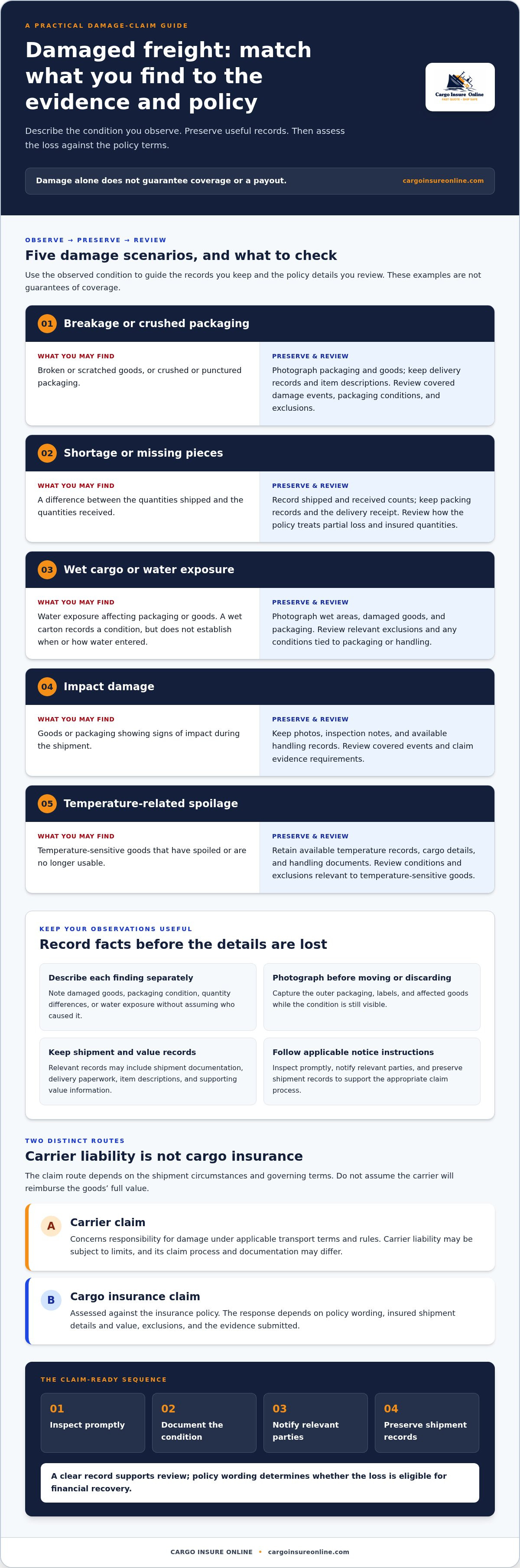
Use this table to connect the damage you observe with evidence to preserve and policy wording to review. The useful evidence varies by shipment and claim.
| Damage scenario | Useful evidence | Policy detail to review |
|---|---|---|
| Breakage or crushed packaging | Photos of the packaging and goods, delivery records, item description | Covered damage events, packaging conditions, exclusions |
| Shortage or missing pieces | Counts shipped and received, packing records, delivery receipt | How the policy treats partial loss and insured quantities |
| Wet cargo or water exposure | Photos of wet areas, damaged goods, and packaging | Relevant exclusions and any conditions tied to packaging or handling |
| Impact damage | Photos, inspection notes, and available handling records | Covered events and claim evidence requirements |
| Temperature-related spoilage | Available temperature records, cargo details, and handling documents | Conditions and exclusions relevant to temperature-sensitive goods |
For protection aligned with cargo type and transport mode, compare freight insurance options for air, sea, and trucking shipments.
Damaged Freight: Insurance Claim or Carrier Liability?
A carrier’s role in moving your shipment does not mean it automatically reimburses the full value of damaged goods. Responsibility and recovery are separate questions. The carrier may be responsible under applicable terms and circumstances, while cargo insurance is assessed under a separate policy. Identifying the relevant route can help you assemble the right records instead of assuming one claim process covers everything.
What carrier liability may and may not mean
Carrier liability concerns whether the carrier is responsible for loss or damage under the terms and rules that govern the shipment. Its scope and any applicable limits can vary with the transport mode, route, contract, and circumstances of the damage. As a result, a carrier’s potential liability may not match the shipment’s commercial value. Delivery by a carrier is not a promise of full-value reimbursement.
When cargo insurance adds a separate layer
Cargo insurance is reviewed under its own policy wording, conditions, exclusions, insured shipment details, and valuation basis. Before goods move, make sure the insured interest and declared value accurately reflect the shipment. If damage occurs, the insurer’s assessment follows the policy, while a carrier claim follows the applicable liability process. Freight insurance for damaged goods can provide a distinct route to financial protection, but it does not guarantee payment for every loss.
Keep the documentation paths clear. A carrier claim may require transport and delivery records that help establish the shipment’s condition and the circumstances. An insurance claim may also rely on policy details, shipment descriptions, and evidence supporting the claimed loss. Some documents may be relevant to both, but requirements and deadlines can differ. Follow the instructions that apply to each process.
| Question | Carrier liability | Cargo insurance |
|---|---|---|
| What is assessed? | Carrier responsibility under applicable terms and circumstances | Eligibility under the insurance policy |
| What may affect recovery? | Governing rules, contract terms, and applicable limits | Covered events, exclusions, conditions, insured value, and valuation basis |
| What records may help? | Transport documents, delivery records, and evidence of condition | Policy and shipment details, value records, and damage evidence |
These paths are not interchangeable, and the specific terms matter. For a deeper comparison of their roles and differences, read carrier liability versus cargo insurance.
Damaged Freight: A Claim-Ready Checklist
Once you discover damage, a calm, organized response can help keep important details from disappearing. Do not guess at the cause or wait until you have a perfect file. Start with what you can see, notify relevant parties promptly, and follow the policy and transport contract instructions for notice and claim timing. Requirements vary by shipment and route.
Prompt, organized evidence gives claim reviewers a clearer picture of what arrived, what was damaged, and which shipment records support the claim.
- Inspect the shipment. Check the exterior, packaging, labels, seals, and goods. Note visible damage, missing pieces, or other exceptions on delivery paperwork when possible. Keep observations factual.
- Record what you find. Take clear photographs from multiple angles, including close-ups and wider shots showing the shipment as a whole. Capture identifying labels and packaging condition before moving or opening items further, if practical.
- Notify relevant parties. Send written notice to the parties required by the policy or transport terms. Record when and how you sent it, and keep copies of replies. Do not assume notice to one party satisfies every claim requirement.
- Preserve documents and affected items. Gather shipment and value records, and keep damaged goods and packaging when practical and safe. If repair or disposal is necessary, retain related records and document the condition beforehand.
Document the damage before the evidence disappears
Photograph the shipment, packaging, labels, seals, and visible damage before disposing of materials or rearranging goods. Add the delivery date, shipment reference, and a brief factual description to your notes. For example, write “left carton is wet and split at the lower corner,” rather than guessing how it happened. Preserve affected items and packaging when practical, while following safety and business requirements.
Build a clear claim file
Keep records together in one organized file. Include the commercial invoice, packing list, transport document, delivery record, shipment details, photographs, and written correspondence. Add inspection notes and any repair or disposal records. The insurer or carrier may request specific documents, and submission deadlines depend on the policy and shipment terms. Review those instructions promptly, especially if you discover damage after delivery.
For a smoother review, make sure each record connects to the same shipment and clearly identifies the affected goods. A simple timeline of delivery, discovery, inspection, and notices can help keep the account consistent. This groundwork supports a clearer freight insurance for damaged goods claim, though it does not guarantee coverage or payment.
Review freight insurance options to see how protection can align with your cargo and transport mode.
Choose Freight Insurance Around the Cargo, Route, and Damage Risk
Choose protection by looking at the shipment, not by relying on a one-size-fits-all assumption. Map the cargo, journey, and potential handling risks before comparing policy terms. This makes it easier to identify gaps between the goods’ value and the protection you are considering.
Match protection to shipment type and transport mode
Air, sea, and trucking shipments involve different routes and handling stages. Consider how goods will move, where they may be transferred or stored, and what conditions could affect them. Explore air freight insurance or sea freight insurance as you assess mode-specific needs.
Cargo type matters, too. Electronics and other high-value devices need accurate descriptions and values. E-commerce shipments may pass through multiple handling points, while temperature-sensitive goods call for attention to transit conditions and relevant records. Cargo Insure Online offers air, sea, and trucking insurance, alongside specialized options for electronics, e-commerce shipments, and reefer products.
Turn policy details into a confident next step
Before goods move, review the policy against the actual shipment. Focus on:
- Covered events: Which types of loss or damage may qualify?
- Exclusions: What circumstances or cargo conditions are excluded?
- Valuation: How is the insured value determined, and does it reflect the shipment?
- Conditions: Are there requirements related to packaging, handling, or transit?
- Claim process: What evidence, notices, and submission steps does the policy require?
Compare the insured details with your invoices, packing records, route, transport mode, and handling plan. This practical check can reveal mismatches before a claim is needed. The right protection depends on the cargo, route, transport mode, and policy wording. For freight insurance for damaged goods, those details shape what the policy may respond to, not simply the fact that damage occurred.
Explore freight insurance options for your shipment and review protection that fits the cargo and journey.
Protect Your Next Shipment with a Clear Plan
Damage can raise urgent questions, but a clear process helps you respond with confidence. Document what arrived, preserve shipment records, and follow the notice and claim instructions that apply. Carrier liability and cargo insurance are different pathways, and neither guarantees recovery of the goods’ full value.
The right freight insurance for damaged goods depends on the policy, insured value, cargo, route, transport mode, and relevant exclusions. Review those details before the shipment moves so your protection aligns with the risks and records that matter.
Cargo Insure Online offers coverage options for air, sea, and trucking freight, alongside specialized options for electronics, mobile phones, drones, e-commerce cargo, and reefer products. Explore freight insurance options for your shipment and take a more informed next step. With preparation, cargo protection can feel clearer and more manageable.
Frequently Asked Questions
Does freight insurance cover damaged goods?
Freight insurance may cover damaged goods when the loss meets the policy’s terms. The outcome depends on the insured shipment details, covered events, exclusions, conditions, declared value, and supporting evidence. A damaged delivery alone does not guarantee payment. Review the policy wording and document the condition of the goods and packaging. Cargo type, route, and transport mode can also affect how a claim is assessed.
What should I do first when freight arrives damaged?
Inspect the shipment and document its condition before moving or discarding goods or packaging, when practical and safe. Photograph visible damage, labels, seals, and the outer packaging. Record factual observations on delivery paperwork where possible, then promptly notify the parties required by the policy or transport terms. Keep a copy of each notice and follow the applicable instructions for claim timing. Avoid guessing what caused the damage.
Can I claim against the carrier and my cargo insurance?
You may have separate claim routes, but each is assessed under different terms. A carrier claim concerns responsibility under applicable transport terms and circumstances. An insurance claim is reviewed against the policy’s wording, conditions, and exclusions. Keep relevant parties informed and retain documents for both processes. Do not assume one notice covers both claims, or that pursuing both means you can recover more than the loss.
What documents do I need for a damaged freight insurance claim?
Useful records often include the insurance policy or certificate, commercial invoice, packing list, transport document, delivery record, and photographs of the shipment and damage. Keep written notices, correspondence, inspection notes, and any repair or disposal records together. The insurer may require additional documents, and submission instructions depend on the policy and shipment terms. Organize records by shipment so the goods, value, delivery, and damage are easy to connect.
How much does freight insurance for damaged goods cover?
The amount depends on the insured value, valuation basis, policy limit, applicable conditions, and the loss accepted under the policy. The amount you can claim may not equal the shipment’s full commercial value. Check how the policy values the goods and whether limits, exclusions, or other terms affect recovery. Accurate shipment descriptions and value records help support assessment, but the final amount depends on the policy and claim review.
What types of freight damage should I document?
Document visible breakage, crushed or punctured packaging, missing items, water exposure, impact damage, and signs of temperature-related spoilage. Photograph the exterior and affected goods from multiple angles, and record quantities and observations factually. For temperature-sensitive cargo, retain available records relevant to transit conditions. These are examples of damage scenarios, not guarantees of coverage. The policy determines which events may be eligible and what evidence is needed.
Is carrier liability enough to protect damaged goods?
Not necessarily. Carrier liability depends on the applicable terms and circumstances, and any limits may not match the goods’ commercial value. Cargo insurance is a separate arrangement, assessed under its own wording, conditions, and exclusions. Review both the transport terms and policy before shipping, especially for high-value goods. The right freight insurance for damaged goods depends on the shipment and coverage details, not simply on the carrier’s involvement.


