
Over 60% of freight in transit moves critically underinsured, trapped under legacy carrier liability limits that pay pennies on the dollar during a loss. Manual booking forms waste operational hours. Rigid annual policies fall short on ad-hoc spot market loads. Complex licensing hurdles stall monetization. Integrating a modern embedded cargo insurance platform eliminates these roadblocks instantly, turning a slow administrative chore into automated, one-click protection directly inside your operational workflows.
You already know that your booking flows should accelerate revenue, not introduce friction or integration gridlock. How does an embedded system plug directly into your software, and what core capabilities actually matter? In this comprehensive guide, you'll discover how modern logistics platforms integrate frictionless per-shipment insurance, comparing system architecture, multi-modal coverage models, and recurring revenue opportunities. Here is your complete roadmap to deploying instant digital underwriting, automating policy generation, and unlocking software monetization without regulatory headaches.
Key Takeaways
- Discover how an embedded cargo insurance platform leverages RESTful APIs to automate underwriting, bind coverage, and deliver certificates directly within your native booking workflow.
- Understand the operational shift from rigid annual policies to dynamic, per-shipment all-risk protection that eliminates administrative drag and multi-month settlement cycles.
- Explore specialized risk models engineered to protect high-value freight, such as drones, mobile phones, consumer electronics, and reefer products, without arbitrary underwriting caps.
- Turn cargo protection from an operational cost center into a scalable revenue engine by deploying turnkey white-label solutions inside your freight software.
- Evaluate potential integration partners using an enterprise-ready checklist focused on automated claims settlement, multi-modal versatility, and rock-solid regulatory compliance.
What Is an Embedded Cargo Insurance Platform and Why Does Logistics Need It?
An embedded cargo insurance platform is specialized software infrastructure that integrates dynamic risk underwriting directly into native logistics workflows. Forget disconnected paperwork, slow broker emails, and days of administrative drag. By piping digital insurance engines straight into your Transportation Management System (TMS), load board, or booking interface, modern freight platforms issue primary, all-risk shipper's interest coverage right at the point of booking. This integration bridges the operational gap between routine shipment data and instant financial protection, turning what used to be a friction-heavy bottleneck into a rapid, automated execution.
The Crisis of Uninsured Shipments and Carrier Liability
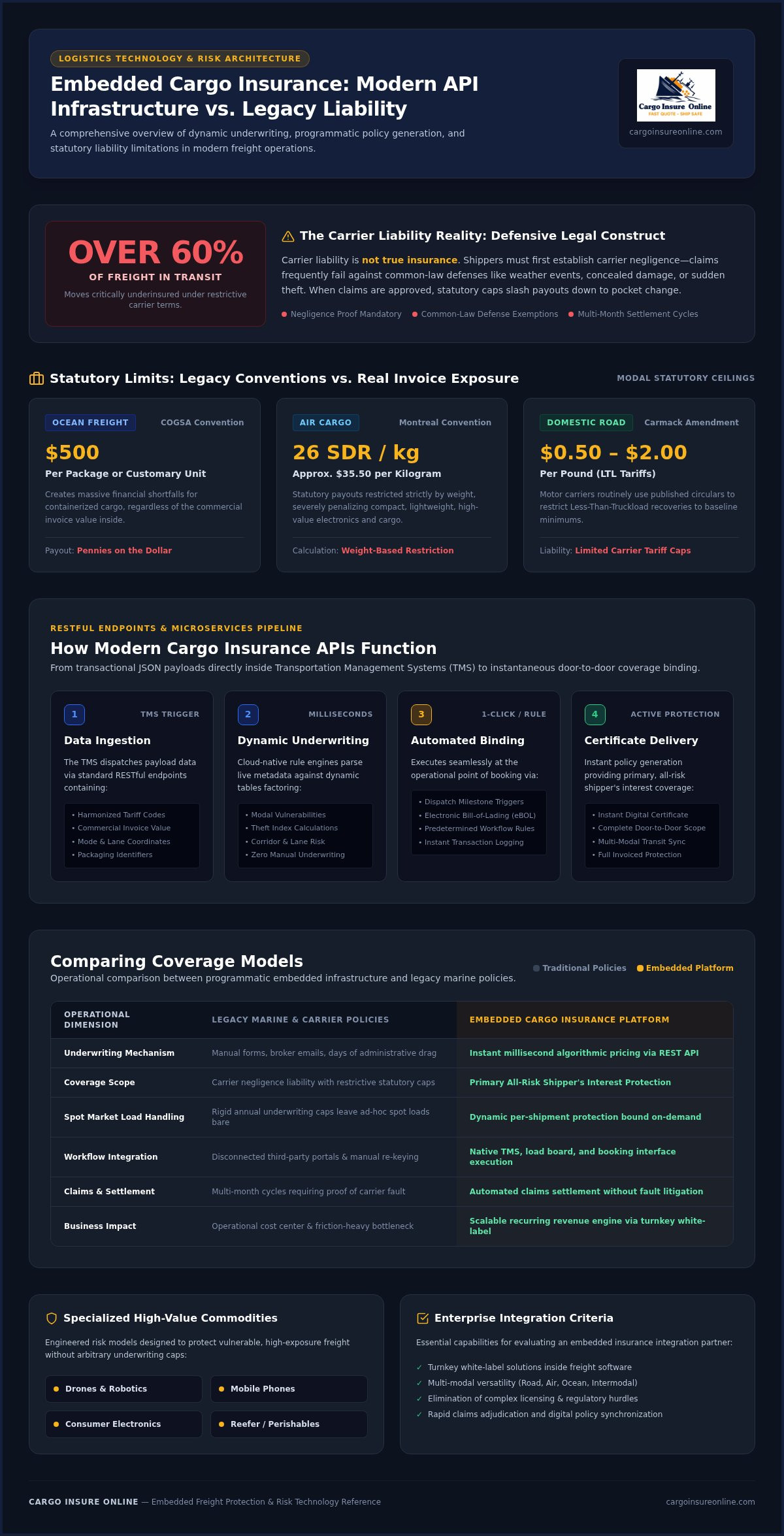
Carrier liability isn't true insurance; it's a defensive legal construct. To recover freight losses under basic motor truck cargo policies, shippers must first prove carrier negligence. That claim fails instantly against common-law defenses like weather delays, concealed damage, or sudden theft incidents. Even when carriers accept fault, statutory caps slash payouts down to pocket change.
International and domestic regulatory conventions severely cap statutory recoveries:
- Ocean Freight (COGSA): Limits recovery to just $500 per package or customary freight unit, creating massive shortfalls for containerized cargo.
- Air Cargo (Montreal Convention): Restricts statutory payouts to 26 SDR per kilogram, translating to roughly $35.50 per kilogram regardless of invoice value.
- Domestic Road Freight: Motor carriers routinely use Carmack Amendment circulars to limit Less-Than-Truckload (LTL) liability to between $0.50 and $2.00 per pound.
While traditional marine and cargo insurance established the historical foundation for transit risk, rigid annual underwriting models leave ad-hoc spot loads unprotected. Over 60% of transit cargo moves underinsured, exposing freight owners to balance-sheet-breaking losses.
How Embedded Technology Bridges the Operational Freight Gap
Embedded technology closes this exposure gap by making protection programmatic. A modern embedded cargo insurance platform ingests the live metadata already stored in your booking workflow, including harmonized tariff codes, lane origins, equipment types, and declared values. Algorithms evaluate this payload in milliseconds, returning dynamic pricing without manual broker intervention.
Dispatch milestones and electronic bill-of-lading (eBOL) generations serve as real-time risk triggers. Coverage binds instantly, certificates generate on the spot, and policies stay synchronized across every leg of transit. The shipper gains complete door-to-door protection, while logistics providers eliminate manual re-keying and deliver a frictionless digital experience.
Core Architecture: How Modern Cargo Insurance APIs Function
Behind every clean user interface sits a high-performance programmatic pipeline. An enterprise embedded cargo insurance platform connects a freight system's database to institutional risk engines through automated microservices. Instead of passing static spreadsheets to underwriters, modern platforms consume transactional JSON payloads to evaluate exposure on the fly. This architecture establishes the required cargo and freight insurance legal scope, securing full shipper's interest protection in milliseconds.
Step-by-Step Data Flow: From Shipping Manifest to Instant Policy
The programmatic lifecycle turns raw shipment manifests into active coverage through four execution phases:
- Data Ingestion: The TMS dispatches a payload containing commodity classifications, commercial invoice values, packaging identifiers, transport modes, and lane coordinates via standard RESTful endpoints.
- Dynamic Underwriting: Cloud-native rule engines parse the metadata against real-time risk tables, factoring in modal vulnerabilities, theft indexes, and transit corridors.
- Automated Binding: Upon user confirmation or predetermined workflow logic, the engine binds the policy and logs the transaction.
- Certificate Delivery: The API responds with a secure PDF download URL and structured metadata, attaching the digital Certificate of Insurance (COI) directly to the master dispatch record.
API vs. Webhook: Driving Real-Time Event Architecture
Synchronous REST calls handle the front end. When a shipper or broker prepares an order, a POST /quotes request fetches an exact rate instantly. This zero-lag response fits smoothly into modern checkouts without slowing down high-volume operations.
Asynchronous webhooks orchestrate the operational lifecycle. Logistics data changes constantly, and manual updates introduce errors. Event listeners monitor TMS state transitions, triggering programmatic coverage actions as cargo moves:
load.tender_accepted: Reserves the underwriting rate without charging premiums upfront.shipment.departed: Confirms pickup and binds dynamic trucking cargo insurance coverage for road transit legs.dispatch.cancelled: Automatically voids pre-bound policies before wheels roll, eliminating audit friction and billing disputes.sensor.temperature_alert: Records telematics warnings, creating an auditable trail for specialized freight lines.
Deploying this event-driven framework lets freight networks safeguard every consignment seamlessly. Exploring an integration through modern digital cargo insurance infrastructure gives technical teams the pre-built endpoints required to launch programmatic protection without re-architecting their core transport engines.
Comparing Coverage Models: Embedded Solutions vs. Traditional Cargo Policies
Traditional marine underwriting was built for static commerce, not dynamic modern supply chains. Annual open covers force logistics teams into rigid premium deposits, painful monthly reporting, and contentious year-end audits. If freight volume plummets, you have trapped capital in unearned premiums. If volume surges on unexpected lanes, you risk severe coverage exclusions.
A modern embedded cargo insurance platform replaces blunt annual forecasts with flexible, per-shipment precision. The operational differences define commercial performance:
| Feature | Annual Open Cover | Spot Freight Broker | Embedded Software |
|---|---|---|---|
| Billing Model | Upfront minimum deposit | Manual ad-hoc invoice | Transactional pay-as-you-go |
| Data Overhead | Monthly manual declarations | Repetitive broker forms | Automated TMS data sync |
| Aborted Loads | Sunk administrative overhead | Disputed manual cancellation | Instant, zero-cost policy voiding |
| Settlement Speed | 30 to 120 days via subrogation | Weeks of broker mediation | Straight-through digital processing |
Single-Trip Spot Coverage vs. Rigid Annual Declarations
Spot-market volatility makes annual declarations obsolete. Locking operations into fixed annual projections exposes platforms to cash-flow strain and surprise policy deductibles. Per-load transactional models align risk expenses directly with realized freight revenue. You bill and bind protection only when wheels turn. If a load cancels or a tender falls through, your software voids the quote instantly, preventing wasted capital on phantom movements.
Multi-Modal Flexibility Across Air, Sea, and Inland Transport
Real-world shipping rarely sticks to one mode. A single shipment transitions from ocean vessel to intermodal rail, transfers across cross-dock staging bays, and finishes via regional truckload. Each mode introduces unique perils, from maritime salt spray to rough highway transit vibration.
High-value, time-critical consignments demand the elevated protection of dedicated air freight insurance to handle rapid transit windows without arbitrary underwriter delays. An embedded cargo insurance platform normalizes these disparate risks under a single automated policy engine. Your platform issues door-to-door, all-risk shipper's interest coverage across air, ocean, and road freight legs without requiring separate contracts or manual broker calls.
Key Features to Evaluate in an Embedded Insurance Integration Partner
Not every insurtech API can handle enterprise freight operations. Many slick interfaces simply pass data to traditional brokerages behind the scenes, creating manual bottlenecks the moment a shipment deviates from standard dry van cargo. Choosing the right embedded cargo insurance platform means looking past front-end design to evaluate underwriting breadth, regulatory compliance, and settlement infrastructure.
Use this core checklist when vetting an enterprise integration partner:
- Granular Multi-Modal Coverage: Automated policy issuance across trucking, air freight, and sea freight lines without forced third-party handoffs.
- Dynamic Underwriting Engines: Real-time risk scoring that evaluates lane risk, carrier safety, and cargo types programmatically.
- Licensing and Anti-Rebating Compliance: Legally sound monetization frameworks, such as technology access or platform service fees, that insulate software vendors from insurance licensing liabilities.
- Zero-Touch Settlement SLAs: Direct claims intake backed by automated optical character recognition (OCR) and fast digital disbursements.
Specialized Underwriting for High-Value and Sensitive Cargo
General commodity underwriting is simple. The real test of an embedded cargo insurance platform lies in handling high-risk, niche freight categories. High-value cargo, like commercial drones, mobile phones, and consumer tech, often triggers immediate exceptions in legacy systems, kicking quotes out for manual review.
Look for direct programmatic support for electronics shipping insurance that binds without human delays. For temperature-sensitive goods, evaluate how the partner's reefer product lines ingest data from telematics and IoT loggers. Connecting sensor-triggered temperature breaches straight into automated underwriting rules ensures rapid coverage binding and ironclad protection for refrigerated cold chains.
End-to-End Digital Claims Settlement and Payout Velocity
A fast checkout means nothing if claims remain trapped in endless paperwork. True automation replaces slow human claims handlers with direct First Notice of Loss (FNOL) workflows. The system should parse delivery receipts, damage photos, and electronic bills of lading automatically, verifying loss details in minutes rather than weeks.
Once approved, settlements must disburse through direct electronic transfers to the claimant. Fast claim turnarounds protect customer relationships, preserving trust when transit disruptions strike. Ready to streamline your operations with modern risk technology? You can integrate our dynamic cargo insurance engine into your booking stack to automate comprehensive freight protection today.
Monetizing Freight Tech: White-Label Integration and Implementation Strategies
Freight tech platforms don't need to treat risk protection as an administrative cost sink. Modern embedded financial infrastructure flips that script entirely. By integrating an embedded cargo insurance platform into your software ecosystem, you turn transactional risk into a scalable, high-margin ancillary revenue engine. Shippers get frictionless point-of-booking protection. Meanwhile, you capture recurring platform revenue while offloading balance-sheet risk directly to institutional underwriters.
White-Label vs. Co-Branded Platform Architecture
Maintaining user trust requires preserving your own product identity. You shouldn't send valuable users off to third-party broker websites. Deploying a turnkey branded cargo insurance platform lets you embed dynamic coverage components directly beneath your own logo, typography, and user interface styling.
Depending on your technical resources, you can choose between modular UI widgets or direct RESTful API microservices. Both paths empower logistics providers to establish compliant platform licensing fees on every bound load. Invoices, booking confirmation modals, and digital Certificates of Insurance generate with your branding front and center, protecting customer relationships while eliminating administrative friction.
Go-to-Market Deployment: From API Sandbox to First Policy
Moving from initial kickoff to live programmatic binding follows a structured, developer-focused roadmap:
- Sandbox Simulation: Ingest synthetic freight manifests to stress-test dynamic rating algorithms against edge cases, complex commodity classifications, and multi-currency conversions.
- Webhook Validation: Configure secure listeners for operational state changes, ensuring canceled tenders trigger instant policy voids and database synchronizations without manual intervention.
- Phased Rollout: Debut programmatic coverage on a single domestic trucking lane with select accounts. Validate receipt generation, audit reporting, and claim workflows before expanding across ocean and air corridors.
Adopting an enterprise-grade embedded cargo insurance platform turns what used to be a messy paperwork drill into a strategic product asset. You deliver instant value to shippers, safeguard cargo door-to-door, and capture reliable ancillary margins on every freight transaction.
Transform Transit Risk Into High-Margin Platform Velocity
Relying on manual declarations isn't sustainable for modern freight. The old carrier liability model leaves consignments exposed and stalls operations with endless disputes. Adopting an enterprise-grade embedded cargo insurance platform turns risk management into an automated growth driver, binding dynamic shipper's interest coverage right at dispatch.
Whether moving high-value mobile devices, electronics, drones, or temperature-sensitive reefer goods, your platform can deliver instant protection across air, ocean, and trucking corridors. You protect shippers from devastating transit losses while capturing recurring ancillary revenue with zero balance-sheet liability.
The technical blueprint is ready, and the commercial upside is immediate. Ready to transform your logistics workflow into a frictionless insurtech ecosystem? Launch your embedded insurance engine with Cargo Insure Online today and deliver seamless, turnkey protection on every single booking.
Frequently Asked Questions
What is an embedded cargo insurance platform?
An embedded cargo insurance platform is specialized software infrastructure that integrates programmatic risk underwriting directly into logistics software ecosystems. Instead of forcing users out to third-party broker websites, it embeds real-time quoting, binding, and certificate issuance right inside booking and dispatch workflows. Shippers get frictionless point-of-sale protection, while freight platforms automate policy issuance without manual paperwork or operational bottlenecks.
How does embedded cargo insurance differ from standard carrier liability?
Standard carrier liability protects the transport carrier against proven negligence, while embedded cargo insurance provides primary, all-risk shipper's interest coverage. Carrier liability relies on statutory limits that often pay cents on the dollar and exclude natural perils or theft without clear fault. Embedded shipper's interest coverage reimburses the full commercial invoice value directly to the cargo owner, eliminating protracted legal disputes and subrogation battles.
Can our software platform legally offer cargo insurance without an insurance license?
Yes, your software platform can legally monetize embedded insurance without holding an insurance producer license. Instead of taking direct insurance commissions, unlicensed tech platforms partner with licensed digital intermediaries. Revenue is structured through compliant technology access fees, integration licensing, or platform administrative charges. This framework keeps you fully compliant with state anti-rebating and insurance inducement statutes while unlocking recurring software revenue.
How quickly can developers integrate a cargo insurance API into an existing TMS?
Most engineering teams deploy a core integration within a few days to two weeks using modern RESTful APIs and pre-built webhooks. With comprehensive developer documentation and active sandbox testing environments, developers don't have to build complex underwriting logic from scratch. Integration typically involves mapping JSON shipment payloads to standard quoting endpoints, configuring event listeners for state changes, and embedding digital certificate downloads into existing dispatch screens.
How are insurance claims processed on an embedded platform?
Embedded platforms process claims through automated digital First Notice of Loss (FNOL) workflows rather than manual paper submissions. Shippers submit electronic loss notifications alongside delivery receipts, proof of delivery notes, and damage photographs through an integrated interface. Optical character recognition and automated validation verify claim documentation rapidly. Once approved, the system executes electronic funds transfers directly to the claimant, settling claims in days rather than months.
Can embedded insurance platforms support high-value goods like electronics and drones?
A sophisticated embedded cargo insurance platform easily handles sensitive, high-value freight through specialized algorithmic underwriting rules. Advanced platforms provide dedicated coverage for vulnerable products like consumer electronics, mobile phones, commercial drones, and temperature-controlled reefer cargo. Dynamic risk models assess commodity vulnerabilities and transit lanes instantly. This prevents rigid underwriting rejections and ensures fragile freight receives tailored protection without requiring human broker intervention.
What data fields are required to generate an instant cargo insurance quote?
Generating an instant quote requires just five standard data fields already captured during normal booking. Your system transmits the commercial invoice value, commodity description or harmonized tariff code, mode of transit, origin coordinates, and destination address via JSON. Programmatic underwriting engines parse these data points against real-time risk tables in milliseconds. Coverage rates return instantly, allowing users to bind protection with a single click before freight departs.


