

Flatbed heavy-haul insurance for oversized machinery in transit should account for cargo risks such as tarp tearing, as well as protection for the truck and trailer. Auto liability coverage is required by law for flatbed trucking. The right mix depends on the load and how the trip is planned.
It’s easy to focus on the truck, but an exposed or damaged load presents a separate set of risks. This guide explains what flatbed insurance may cover and how cargo value, machinery dimensions, route, equipment, and underwriting factors shape coverage, without treating every haul alike.
You’ll also learn how to assess tarp and securement risks, which details shape an insurance quote, and how trucking and cargo protection fit together. Start by understanding the load as well as the vehicle carrying it.
Key Takeaways
- Understand how flatbed, step-deck, RGN, and oversized-load operations can call for different coverage considerations.
- See how the load, equipment, operating history, and hauling details influence underwriting and insurance pricing.
- Learn why tarp damage and resulting cargo damage may be treated differently under a policy.
- Identify how rain exposure, tarping practices, and load securement can affect a cargo claim.
- Compare trucking and cargo protection to see which coverage best fits the risks of your machinery haul.
What Is Flatbed Truck Insurance?
Flatbed truck insurance can combine vehicle liability, physical damage, and cargo protection. For heavy machinery, coverage details should match the trailer, load, route, and hauling responsibilities.
Coverage for Flatbed and Oversized-Load Carriers
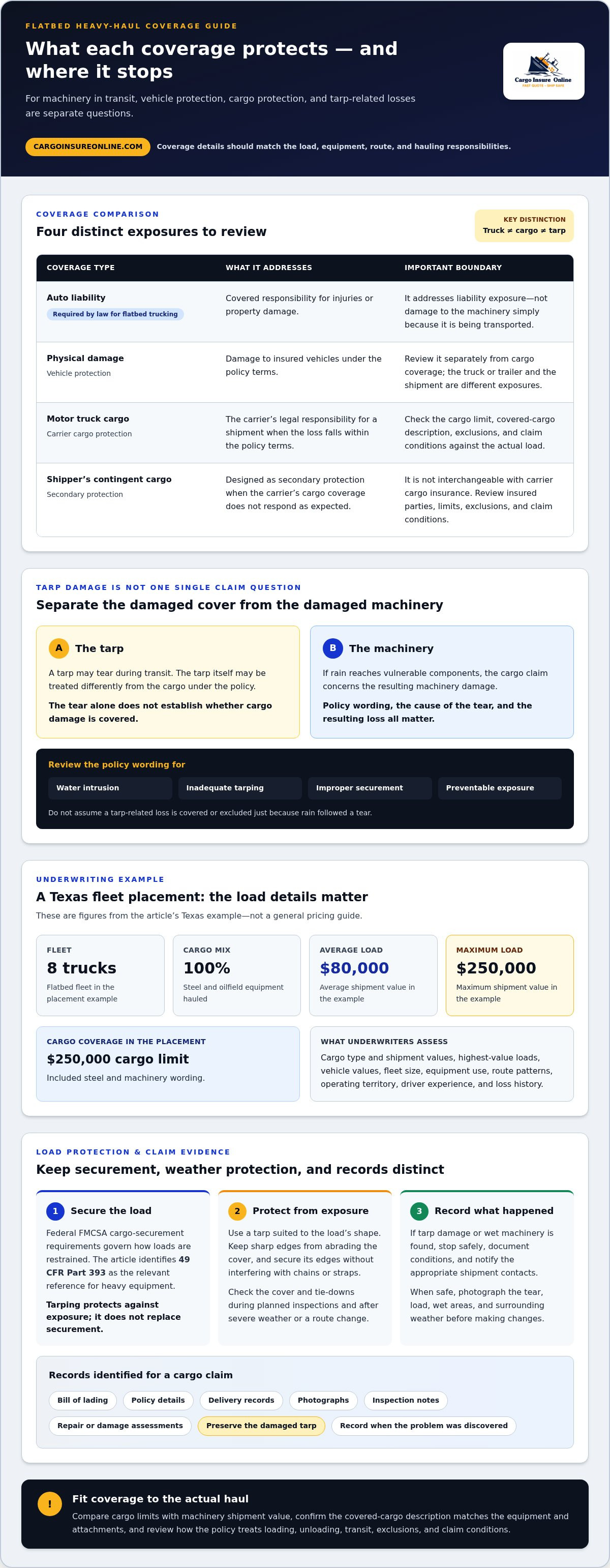
Flatbed, step-deck, and removable gooseneck (RGN) carriers use different trailer configurations. Coverage should reflect the equipment in use and the carrier’s operations. Review auto liability, physical damage, and motor truck cargo coverage separately. Each addresses a different exposure, from vehicle damage to covered cargo loss.
Carrier cargo insurance covers the carrier’s legal responsibility for a shipment when the loss falls within the policy terms. Shipper’s contingent cargo insurance is designed as secondary protection when the carrier’s cargo coverage does not respond as expected. These policies are not interchangeable: review the insured parties, limits, exclusions, and claim conditions.
Oversized-load permits and escorts relate to route and movement requirements, not cargo insurance itself. Permit conditions can vary by jurisdiction and route, so account for applicable requirements in the shipment plan before dispatch.
Heavy Machinery Cargo Protection
Machinery presents cargo risks beyond its weight. A loader with exposed controls, an excavator with vulnerable components, and a crated machine each require different handling and weather protection. Assess cargo coverage against the goods being shipped, their declared value, and the policy’s covered causes of loss.
Compare the cargo limit with the machinery’s shipment value, then review how the policy treats loading, unloading, and transit. Check that the covered-cargo description matches the equipment. A mismatch between the policy wording and the actual load can complicate a claim.
Oversized dimensions can affect trailer choice, route, and handling. Keep the machinery description and transport documents consistent, including details of any attachments shipped with it.
Tarp Damage, Exclusions, and Liability
A torn tarp does not automatically mean cargo damage is covered. The policy wording, cause of the tear, and resulting loss all matter. For example, a tarp may tear during transit, allowing rain to reach electrical components. The cargo claim concerns damage to the machinery, while the tarp itself may be treated differently.
Responsibility depends on the facts and contractual duties. The carrier, driver, shipper, or tarp provider may be involved, depending on who selected, supplied, applied, or inspected the tarp. A claim decision may also depend on evidence of what caused the tear and what happened after it was discovered.
Review exclusions for water intrusion, inadequate tarping, improper securement, and preventable exposure. The policy wording determines how these conditions apply. Do not assume a tarp-related loss is covered or excluded just because rain followed a tear.
Securement, Weather Protection, and Damage Response
Federal FMCSA cargo-securement requirements govern how loads are restrained. For heavy equipment, 49 CFR Part 393 is the relevant reference identified for securement; the proper method depends on the machinery, trailer, and load configuration. Tarping protects against exposure, but it doesn’t replace securement.
Protect machinery from wind, rain, and road debris with a tarp suited to the load’s shape. Keep sharp edges from abrading the cover, and secure its edges without interfering with chains or straps. Check the cover and tie-downs during planned inspections and after severe weather or a route change.
Oversized-load permits and escorts can affect route timing and stopping options. If the driver finds tarp damage or wet machinery, they should stop safely, document the conditions, and notify the appropriate shipment contacts. When safe, photograph the tear, load, wet areas, and surrounding weather before making changes.
For a cargo claim, gather the bill of lading, policy details, delivery records, photographs, inspection notes, and repair or damage assessments. Preserve the damaged tarp and record when the problem was discovered. These details help establish what happened, when it happened, and how the machinery was affected.
Flatbed insurance pricing and underwriting factors
Flatbed insurance pricing reflects the carrier’s vehicles, cargo, operating history, and hauling profile. Heavy machinery can change the risk picture: load value, equipment type, and cargo wording all matter. A Texas fleet placement example shows how these details come together in underwriting.
What underwriters assess
The Texas example involved an 8-truck flatbed fleet hauling 100% steel and oilfield equipment. Its average load value was $80,000, with a maximum load value of $250,000. Those figures help explain why underwriters look beyond the truck count. Cargo type, shipment values, and the highest-value load shape the exposure being insured.
Coverage in that placement included $250,000 in cargo coverage with steel and machinery wording. The wording matters because a general cargo description may not reflect specialized freight. Operators should compare the policy’s covered-cargo description with actual machinery, attachments, and materials hauled. Accurate descriptions give underwriting a clearer view of the operation.
Fleet, vehicles, and coverage structure
These cover different exposures. Liability addresses covered responsibility for injuries or property damage, while physical damage applies to insured vehicles under the policy terms. Fleet size, vehicle values, and selected limits shape the coverage structure.
Underwriters also assess how the operation uses its equipment. A carrier hauling steel on flatbeds may present a different profile from one moving machinery on step-decks or RGNs. Route patterns, operating territory, driver experience, and loss history help describe the exposure. Report the actual mix of work, not just the fleet’s broad vehicle category.
Loss history and renewal comparisons
Past claims can influence underwriting because they show the kinds of losses an operation has experienced. In the Texas example, the fleet had one prior cargo loss involving improperly tarped lumber, valued at $14,000. That detail connects loss history with cargo handling practices. Underwriters may consider the circumstances, corrective steps, and relevance to current hauling.
The example’s premium was 9% below the incumbent renewal indication. That result describes this placement, not a general flatbed rate or expected saving. A useful comparison looks at the proposed premium alongside limits, deductibles, covered cargo, and exclusions. A lower figure alone doesn’t show whether two policies protect the same exposures.
Prepare a clear submission with fleet details, cargo types, load values, operating history, and existing coverage. Then compare the terms line by line. For transportation exposure, trucking insurance coverage is one part of that review.
What insurance covers tarp tearing during flatbed heavy-haul machinery transport?
For flatbed heavy-haul oversized machinery in transit, assess insurance against cargo damage that follows tarp tearing. The tear itself does not establish a covered loss. A split tarp with dry machinery presents a different claim from rain reaching exposed electrical components. Both the policy wording and the cargo’s condition matter.
Separate the tarp damage from cargo damage
Motor truck cargo insurance addresses covered loss or damage to goods in transit, subject to its terms. The tarp is protective equipment, not the machinery being transported. Damage to the tarp alone therefore doesn’t automatically establish cargo damage. If an excavator arrives with moisture inside its control panel, identify and document that damage separately from the torn cover.
Physical damage coverage for the tractor or trailer concerns damage to insured vehicles, not automatically the cargo or tarp. For instance, a snag that damages both a cover and the trailer side raises separate property questions. Record each affected item: machinery, tarp, trailer, and any other property.
Check the cause and policy language
Build a timeline of the event. Record when the tarp was last intact, where the tear appeared, and the conditions during transit. A tear caused by contact with a sharp machine edge differs from one caused by roadside debris. These details help explain how the cover failed and whether that failure led to machinery damage.
Review covered causes, exclusions, deductibles, and conditions in the cargo policy. Compare those terms with the shipment documents and machinery description. Water intrusion, inadequate tarping, and improper securement may receive different treatment under the policy wording. The phrase “tarp damage” alone does not determine how a claim applies.
Build a claim record
After discovering damage, stop in a safe location and photograph the tarp before repairs. Capture the tear close up, then photograph the full load and trailer. Document wet areas and visibly affected components. Note the location and time in the incident report, and preserve the damaged cover for possible inspection.
Gather the bill of lading, cargo description, delivery records, inspection notes, and relevant communications. If the receiver records an exception, keep it with the photographs. A repair assessment can identify affected machinery parts. Preserve the original image files and note who took each photograph.
Match protection to the shipment
A review of insurance for flatbed heavy-haul oversized machinery in transit should distinguish tarp tearing from the resulting machinery damage. Describe the equipment accurately, including exposed components and attachments. For example, a shipment with vulnerable controls presents a different exposure from sealed machinery. Match the shipment description and loading records to the cargo being transported.
Keep the shipment value, transport documents, and coverage terms together before dispatch. Clear records help show what was loaded and its condition at delivery. If moisture appears, document it before operating the equipment, since operation may change the condition being assessed.
Does motor truck cargo insurance cover damage caused by a torn tarp?
Motor truck cargo insurance may cover machinery damage after a tarp tears if the loss falls within the policy’s covered causes and terms. A torn tarp alone does not establish a covered cargo claim. For example, a split cover with dry machinery differs from rain entering and damaging electrical components.
Start with the cargo damage
Separate the cost of replacing the tarp from damage to the shipment. Cargo coverage concerns covered loss or damage to goods in transit. The tarp is protective equipment, not the machinery being transported. If an excavator arrives with water inside its control panel, document that damage separately from the torn cover.
Next, match the reported damage to the policy wording. Review covered causes, exclusions, deductibles, cargo descriptions, and claim conditions. The policy’s treatment of rain exposure or inadequate protection can affect how the loss is assessed. The same tear can lead to different outcomes: exposed machinery may be damaged, while sealed equipment remains unaffected.
Trace how the tear happened
Build a clear sequence. Record when the tarp was last inspected, when the tear was found, and what happened in between. For instance, a cover can snag on a sharp machine edge, loosen in the wind, or be struck by road debris. The cause helps explain whether the transit event resulted in cargo damage.
Also document the load’s condition before departure. Loading photographs can show the tarp’s placement, contact points, and visible securement. At delivery, take new photographs before removing the cover. Compare the images for changes, such as a tear over a vulnerable component or water marks inside a housing.
Preserve useful claim evidence
After discovering damage, the driver should stop safely and record the location and time. Photograph the tarp close up, then capture the full load and trailer. Document wet surfaces, damaged components, and any temporary protection applied. Keep the damaged cover available for inspection instead of discarding it.
Collect the bill of lading, cargo description, delivery records, inspection notes, and relevant communications. If the receiver records an exception at delivery, preserve it with the photographs. A repair assessment can connect visible symptoms to affected machinery parts. Keep the original files and note who took each image.
Review responsibilities and policy limits
For flatbed heavy haul oversized machinery transit tarp tearing insurance, distinguish the carrier’s cargo policy from the shipper’s coverage. Each responds according to its insured parties, terms, and covered interests. One policy does not automatically replace the other. Check who is insured, which machinery is described, and how the policy limits apply to the load.
A flatbed heavy haul oversized machinery transit tarp tearing insurance review should connect the reported damage to the policy wording and evidence. Report the incident through the applicable claims process and provide a documented timeline. Do not assume the tarp’s failure proves responsibility or coverage. The policy terms, cause of loss, and evidence of machinery damage shape the assessment.
What exclusions apply to rain, water damage, inadequate tarping, or improper securement
A tarp-related claim depends on the policy wording and the facts of the loss. A rain exclusion, a defective tarp, and loose chains raise different issues. For example, water entering through a tear caused by road debris differs from moisture that accumulated before loading. Identify the cause and resulting machinery damage separately.
Rain and water damage
Check how the cargo policy treats water, rain, and exposure during transit. Some wording distinguishes sudden water entry from gradual moisture or weather exposure. For example, rain entering a torn cover during a trip differs from machinery that was already damp before dispatch. Loading and delivery photographs can help establish when the wetness appeared.
Check for conditions related to packaging, covering, or cargo preparation. A policy may specify whether the machinery needs a particular form of protection. Record exposed openings, vulnerable electrical components, and the tarp’s placement before departure. These details help clarify whether the damage followed a transit event or an existing condition.
Inadequate tarping
“Inadequate tarping” can concern how a cover was selected, applied, or maintained. A tarp that leaves a control panel exposed presents a different fact pattern from one that tears after catching on a sharp edge. Review exclusions and policy conditions for language about reasonable protection, wear, or preventable exposure.
Document the cover’s condition at loading, including contact points with the machine. Note whether padding or edge protection was used where the tarp touched metal. If the tarp shifted during transit, preserve inspection records and photographs showing its position before and after the movement.
Improper securement
Cargo securement and weather covering serve different purposes. Chains and straps restrain the machinery; a tarp limits exposure. A loose tie-down can allow movement that abrades or punctures the cover. That sequence may raise separate questions about securement practices and resulting cargo damage.
Compare the actual loading method with policy conditions and shipment records. For example, photographs can show whether straps crossed the machine correctly and whether tarp edges were secured. Keep notes about inspections, adjustments, and route interruptions. A claim review needs to account for the actions taken, not just the damaged tarp.
Read exclusions against the loss facts
Review each relevant clause alongside the timeline: loading, departure, tarp inspection, discovery of the tear, and delivery. Do not treat a water exclusion as proof that every rain-related loss is excluded. The exact wording and cause matter. Likewise, a securement issue alone does not establish whether machinery damage followed.
For a shipment-specific coverage review, explore trucking insurance options alongside the cargo policy terms. Keep the machinery description, loading photographs, delivery notes, and incident report together. A clear record helps distinguish rain exposure, tarp failure, and securement concerns when reviewing the claim.
Cargo Insure Online: Air Freight Insurance
Cargo Insure Online offers Air Freight Insurance for cargo moving by air and Trucking Insurance for road-transport risks. For a heavy machinery haul, consider how trucking coverage fits the cargo exposure, alongside the carrier’s policy terms and shipment details. Air Freight Insurance applies when the journey includes air transport, while Sea Freight Insurance covers cargo moving by sea. GAP Insurance can address a separate financial gap in a shipment’s coverage.
Before arranging protection, gather the machinery description, transport mode, and details of the cargo risks you want to address. This gives you a clearer starting point for considering coverage across the shipment’s journey.
Visit cargoinsureonline.com to explore coverage options or contact Cargo Insure Online.
Prepare the Next Machinery Shipment
Before dispatch, turn the haul plan into a clear coverage brief. Include the machinery description, transport mode, exposed components, tarp arrangements, and who handles inspections. These details give your team a practical starting point for matching the shipment with policy wording.
For flatbed heavy-haul oversized machinery transit and tarp-tearing insurance, consider the whole journey, not just the road segment. Cargo Insure Online offers Trucking Insurance, Sea Freight Insurance, and Air Freight Insurance for cargo moving by those modes. The policy terms and facts of a loss determine how coverage applies.
Make the next step straightforward: gather the shipment details and identify the risks you want to address. Contact Cargo Insure Online to discuss your cargo insurance needs and move ahead with a clearer plan.
Frequently Asked Questions
What are typical cargo insurance limits, deductibles, and premiums for heavy-haul machinery?
There is no standard limit, deductible, or premium for every heavy-haul shipment. Set the cargo limit to reflect the machinery’s insured value and review how the deductible applies to a covered loss. Premiums depend on details such as cargo type, shipment value, operating history, and selected coverage terms. For example, list separately valued attachments in the shipment information so the insured amount reflects the full load.


