

Frequent, long-distance, and high-value phone shipments are the ones most likely to need mobile phone cargo transit insurance. In the United States, trip transit insurance isn’t required by law, but shipping contracts commonly require it. The practical question is whether your cargo could face a loss your existing cover doesn’t address.
It’s easy to focus on the phones and overlook the risks while they’re moving between locations. A clear transit policy helps you understand what losses may be covered, where restrictions apply, and how protection relates to the shipment’s full journey.
This guide explains who should consider coverage, what to check in policy exclusions and limits, and how to arrange insurance for a shipment. Pay particular attention to the cargo’s value and route, and to the terms that define protection.
Key Takeaways
- Assess shipment value, route, goods, and coverage limits to understand the factors that shape cargo insurance costs.
- Review exclusions and restrictions closely, including how policy terms treat theft, mechanical breakdown, and handling.
- Map protection across the shipment journey, including loading and unloading, not just the time goods are on the move.
- Learn how terms such as goods in transit, trip transit, and inland marine relate to the cargo and property being transported.
- Prepare shipment details and coverage needs before arranging insurance so the policy can be matched to the journey.
What is goods in transit insurance?
Goods in transit insurance covers goods, inventory, and business property lost or damaged during shipment. For mobile phones, it can protect the shipment itself, subject to the policy’s terms, limits, and exclusions.
Premiums and Deductibles
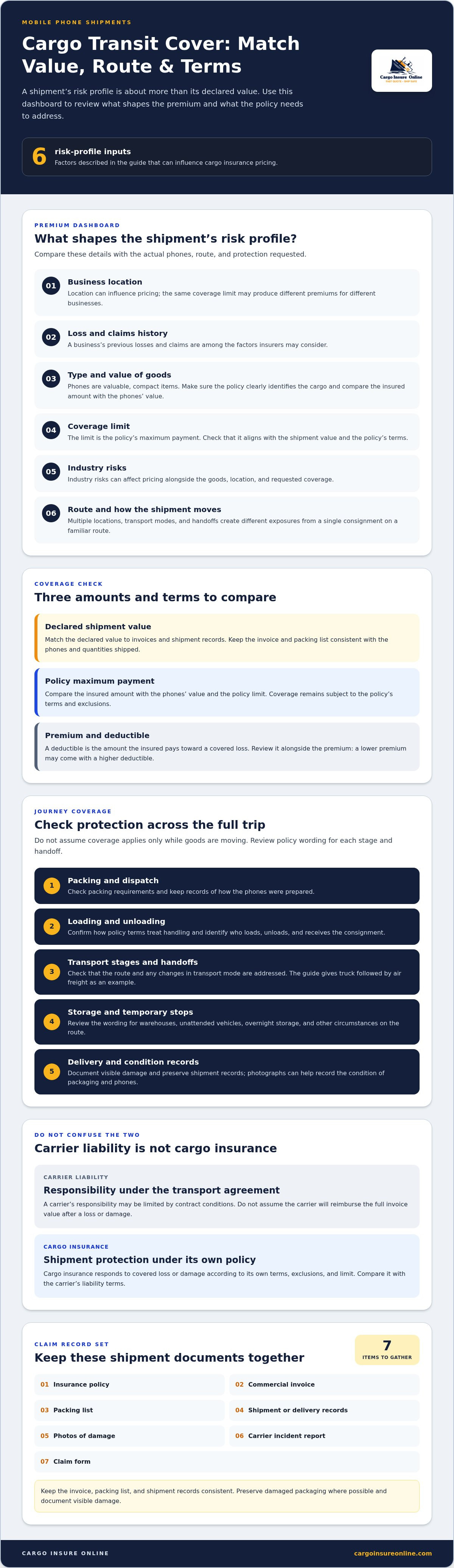
The premium reflects a shipment’s risk profile, not just its declared value. Factors can include the business’s location, loss and claims history, type of goods, coverage limits, and industry risks. A shipment of high-value phones may need different protection from one carrying ordinary inventory. Compare the insured amount with the phones’ value and the policy’s maximum payment.
A deductible is the amount the insured pays toward a covered loss. Review it alongside the premium, since a lower premium may come with a higher deductible and change what the business pays after a claim. Cargo van deductibles are a separate vehicle-insurance consideration, not a default deductible for phone cargo coverage.
Costs also depend on how the shipment moves and the protection requested. A business shipping phones through multiple locations faces different exposures from one moving a single consignment along a familiar route. The coverage limit sets the policy’s maximum payment. The type of goods matters too: phones are valuable, compact items, so the policy should clearly identify the cargo being shipped.
When comparing terms, match the declared shipment value to invoices and shipment records. Then check whether coverage applies to the full journey, including handoffs between transport modes. For example, a phone consignment moving by truck and then air freight has multiple transit stages. Location and industry risks also influence pricing, so the same coverage limit can produce different premiums for different businesses.
Carrier Liability and Cargo Insurance
Carrier liability concerns a carrier’s responsibility for goods under the applicable transport agreement. Cargo insurance instead insures the shipment against covered loss or damage, subject to the policy’s terms. The two aren’t interchangeable: a carrier’s liability may be limited by contract conditions, while cargo coverage is assessed under its own terms, exclusions, and limit. Commercial auto insurance typically addresses vehicle-related risks, not the full value of phones carried as cargo.
For a mobile phone shipment, compare the carrier’s liability terms with the cargo policy’s insured value and covered events. Don’t assume the carrier will reimburse the full invoice value after loss or damage.
To file a mobile phone cargo claim, gather the insurance policy, commercial invoice, packing list, and shipment or delivery records. Include photographs of damaged packaging or phones, along with any carrier incident report and claim form. These documents link the goods’ value and condition to the shipment and reported loss.
Keep records consistent: the invoice should identify the phones, and the packing list should match the shipped quantities. Report the loss through the claim process and preserve damaged packaging where possible. For example, photos taken when a delivery arrives can document visible damage before the cartons are moved or opened further.
Cargo exclusions and restrictions
Coverage depends on the policy wording, not simply on a phone’s value or destination. Restrictions may define which events are covered, how the goods must be packed, and what security steps apply during storage or transport.
Follow the policy’s packaging and security requirements, and keep evidence of how each shipment was prepared. Use packaging suited to the phones, secure cartons against movement, and record handoffs, storage, and dispatch. The policy terms set the applicable requirements.
Exclusions for mobile phone cargo transit insurance depend on the policy wording. Mechanical breakdown is a common cargo-van coverage exclusion, as are tools or equipment left overnight in an unlocked van. These examples concern cargo-van coverage; they don’t automatically define exclusions for every shipment policy.
Read exclusions in the context of the actual journey. A phone consignment may pass through a warehouse, a loading bay, and several transport stages. Check the terms for storage, unattended vehicles, packing, handling, theft, and damage. If a policy excludes a stage or circumstance, a related loss may fall outside the coverage.
- Packing: Match cartons and internal protection to the shipment, then retain packing records.
- Security: Record how phones are secured during vehicle stops and temporary storage.
- Handling: Identify who loads, unloads, and receives each consignment.
- Policy limits: Compare exclusions with the route and planned handoffs before dispatch.
These steps provide a practical review, but the policy terms still apply. If a truck stays overnight, for example, review the wording on unattended vehicles and overnight storage. If a carton arrives crushed, photographs of the exterior and contents can help document its condition. Keep shipment records aligned with the insured goods and declared value.
Restrictions can also affect when coverage starts and ends, which locations count as insured transit, and how a claim is assessed. Read the definitions of transit, temporary storage, and covered property. Check that the policy description matches the phones, packaging, route, and transport arrangements.
Before dispatch, turn the policy into a short shipment checklist: confirm the goods description, packing procedure, security steps, and relevant exclusions. Then make sure the people preparing and handling the consignment follow it. Reviewing cargo insurance coverage details alongside those procedures helps keep the policy wording connected to the shipment.
Vehicle-policy boundaries deserve a separate check: a personal auto policy may exclude commercial use of a work van, potentially leaving the owner responsible for a denied claim. Many commercial auto policies allow incidental personal use, but whether it is covered depends on the policy terms and listed drivers. Cargo van insurance deductibles commonly range from $500 to $2,000, depending on the insurer and policyholder preference. Business contracts commonly require $1,000,000 liability limits and associate this with FMCSA insurance filing requirements. Some standard personal auto insurers use GVWR cutoffs commonly around 10,000-14,000 lbs and may decline vehicles above those limits even when they are used only personally.
Cargo loss or damage during transit, loading, or unloading
Phone shipments face distinct risks at each handoff, from dispatch to delivery. Goods in transit insurance covers goods, inventory, and business property lost or damaged during shipment.
Cargo insurance can cover smartphone theft, loss, or damage when the event falls within the policy’s covered risks. Check the wording for covered events, exclusions, limits, and the points when transit begins and ends.
Transit Theft and Loss
Theft can happen while phones are moving, waiting at a depot, or being transferred between carriers. Check whether the policy covers theft in each relevant setting, including temporary storage and vehicle stops. A carton missing at delivery differs from a recorded theft after a vehicle break-in, so document the last known handoff and report the discrepancy promptly.
For each shipment, retain dispatch records, tracking or handoff details, and delivery confirmation. If a carton goes missing between a warehouse and a recipient, those records help establish where the loss came to light. The policy’s definitions and limits determine how it’s assessed.
Transit Damage Coverage
Damage can occur when cartons shift in a truck, pallets are moved at a depot, or boxes are dropped during loading. Check whether the policy covers handling stages, not just movement between locations. For example, a cracked phone screen found after unloading calls for evidence of the carton’s condition and the damage discovered.
Photograph the outer packaging, labels, and affected phones before discarding materials. Record the delivery time and note visible damage on the carrier’s receipt or incident record. These details link the damage to the shipment and support a clear claim account.
Pay particular attention to loading and unloading, since different people may handle the same consignment. A warehouse team, carrier, and receiving staff can each form part of the chain. Record transfer dates, shipment identifiers, carton counts, and visible packaging damage at each handoff. Consistent records can help distinguish transit damage from damage discovered after delivery.
Use a simple response sequence when loss or damage appears:
- Separate affected phones from undamaged stock and preserve the packaging.
- Photograph the cartons, shipping labels, and damage before repacking.
- Record the shipment reference, delivery details, and the person receiving it.
- Notify the relevant claims contact and follow the policy’s reporting process.
A claim file should link the reported event to the insured shipment. Keep the commercial invoice, packing list, dispatch and delivery records, photographs, and carrier incident documentation together. If a carton arrives short, for example, compare its recorded contents with the packing list and delivery count. If phones arrive damaged, document each affected unit and the packaging condition. The policy wording, evidence, and stated limit guide the assessment; cargo coverage doesn’t automatically mean every incident qualifies.
Goods in transit insurance terminology
Insurance documents use overlapping terms for shipment protection. Goods in transit insurance may also be called motor truck cargo, property in transit, or trip transit insurance. The policy wording matters more than the label. For a phone shipment, identify the insured goods, covered journey, and valuation basis before comparing terms.
Goods in transit describes goods, inventory, or business property moving between locations. Motor truck cargo commonly describes cargo carried by truck. Trip transit refers to coverage arranged for a shipment or journey. A policy may use one of these terms, but check its definition and transport scope rather than assuming they all mean the same protection.
Inland marine is another term businesses may encounter. Businesses can add inland marine or tools-and-equipment coverage for items carried inside a cargo van. This terminology helps distinguish the phones being shipped from other property travelling with them. For example, a consignment of phones and a company’s work equipment are different property categories, and policy documents may address their protection differently.
Valuation starts with the shipment records and the policy’s stated valuation basis. A commercial invoice can support the phones’ declared value, while a packing list identifies quantities and models. The insured limit sets the policy’s maximum payment. The claim amount depends on the documented loss, applicable terms, and any deductible. The policy wording determines how these elements affect the final payout.
If a shipment contains several phone models, for example, keep their descriptions and quantities consistent across the invoice, packing list, and insurance declaration. A mismatch can make it harder to link a damaged or missing item to the insured consignment. Clear records also distinguish the declared shipment value from the policy limit, which may cap payment.
Use these terms as a quick reading guide:
- Insured property: The goods or business items named in the policy.
- Transit: The journey or movement covered by the policy definition.
- Limit: The maximum amount the policy can pay for covered loss.
- Deductible: The portion of a covered loss the insured pays.
- Claim evidence: Records linking the phones, shipment, and reported damage or loss.
For mobile phones, distinguish the phones’ value from that of other cargo. If a carton is damaged, identify its contents and compare them with the shipment documents. The policy’s limit and deductible then apply according to its terms. A claim payment isn’t automatically the retail price of every phone in the shipment.
Before arranging cover, match the goods description, route, transport mode, valuation basis, and limit to the shipment plan. A truck-only trip and a journey with several handoffs may require different policy descriptions. Precise terminology makes coverage easier to compare and claim records easier to organize.
How to obtain transit insurance
Start with the shipment details, then match them to the policy’s cargo description and journey. For phones moving by truck, air, or sea, the requested coverage should reflect each transport stage.
Electronics and Smartphone Insurers
Specialist cargo insurers offer transit coverage for business goods, including electronics and smartphones. Compare policies by the goods they insure, covered transport modes, journey scope, limits, exclusions, and claim requirements. A policy suited to general freight may not describe phone shipments clearly, so check how electronics are identified in its terms.
If a shipper moves phones by truck and air, for example, consider whether the requested coverage addresses both stages. Review the policy’s insured property description and compare it with the shipment invoice and packing list. This helps align the application with the actual goods and route.
Arranging Transit Cover
Before applying, prepare the key shipment details: phone descriptions, shipment value, origin and destination, transport mode, and planned handoffs. Note whether the movement is a single consignment or recurring shipments. These details help define the journey and the protection requested.
Then compare the proposed terms against the shipment plan. Check the coverage limit, deductible, exclusions, covered transit period, and any packing or security conditions. If a consignment changes from truck to air freight, make sure the declared route includes both legs.
Use a simple preparation sequence:
- List the phones, quantities, and shipment value using sales and packing records.
- Map the route, transport modes, storage points, and handoffs.
- Set the coverage limit against the goods being shipped.
- Review exclusions, deductibles, reporting steps, and policy dates.
- Keep the policy and shipment documents together for dispatch and claims.
Clear records make an application more precise. If an invoice describes several phone models, for example, keep the packing list and insurance declaration consistent. A mismatched quantity or vague goods description can complicate a later claim by making it harder to identify the insured shipment.
Businesses that ship phones frequently can organize details into a reusable shipment profile. Keep the usual goods descriptions, routes, transport modes, and handling arrangements current. Update the details when a route changes or a consignment includes different products. A one-off shipment may need a trip-specific description instead.
Before dispatch, confirm that the cover period begins before the goods start moving and matches the planned journey. Keep a copy of the policy with the commercial invoice, packing list, and carrier records. To arrange cover for a phone shipment, request cargo transit insurance with its route and goods details ready.
Cargo Insure Online: Air Freight Insurance
Cargo Insure Online offers Air Freight Insurance for shippers moving phones by air. The right next step depends on the route: Sea Freight Insurance and Trucking Insurance cover other freight modes, while GAP Insurance may suit a separate coverage need. Identify the transport stages first, then match them to the cargo protection you need.
Before arranging coverage, gather the shipment description, value, route, and transport details. Use them to review policy terms, limits, deductibles, and exclusions against the journey. Clear information helps align the requested coverage with the phones being shipped and how they move.
For a phone consignment travelling by air, arrange Air Freight Insurance with Cargo Insure Online.
Make your next shipment decision
Base your coverage decision on the shipment ahead, not assumptions about the last one. A new route, transport mode, or handling plan can change which policy terms matter. Before dispatch, align the shipment details with the protection you intend to arrange.
For mobile phone cargo transit insurance, Cargo Insure Online offers Air Freight Insurance, Sea Freight Insurance, and Trucking Insurance. These options help shippers consider protection across different freight modes. Bring the planned route and shipment information together, then review the relevant coverage for that journey.
Clear details make the next step practical: describe the phones, their destination, and how they’ll travel. This gives you a focused starting point for arranging transit coverage without unnecessary complexity.
Contact Cargo Insure Online to discuss cover for your shipment. A well-prepared plan helps you move forward with greater clarity.
Frequently Asked Questions
Who needs cargo insurance?
Businesses responsible for valuable shipments should consider cargo insurance, especially when shipping frequently or over long distances. A phone distributor sending stock to retailers, for example, may face exposure across several handoffs. Coverage may also matter when a sales contract requires shipment protection or existing arrangements don’t match the goods’ value. Map who bears the risk of loss at each stage before deciding what coverage fits.
What does mobile phone cargo transit insurance cover?
Mobile phone cargo transit insurance can cover insured phones against covered events such as theft, damage, or total loss during transit. Coverage may also address vandalism, fire, explosion, transit accidents, natural disasters, general average, salvage charges, and gaps in carrier liability. The policy sets the applicable limits and exclusions. For example, a broken screen after a transport accident is assessed under the policy terms, not automatically paid at retail value.
How can a business insure mobile phones shipped by parcel, air, or truck in the U.S.?
Arrange cargo coverage that reflects the parcel or courier service, air leg, and truck movements in the shipment plan. Provide the goods description, shipment value, route, and transport modes when requesting a quote. If a parcel service hands a carton to an air carrier and then a truck operator, include each stage in the declared journey. Keep the policy, invoice, and parcel tracking or delivery records together for reference.


