
For dropshipping cross-border transit damage and lost-parcel insurance, the key is whether protection follows the shipment across its full route and what the policy excludes.
It’s easy to assume the courier’s coverage will make a customer whole. But carrier liability is generally limited by the shipping contract and applicable laws, and claims may be restricted by issues such as inadequate packaging or a delivery scan. Separate cargo insurance can provide another layer of protection, subject to its terms.
This guide explains how coverage may apply from dispatch through delivery, what to compare between carrier-provided and separate insurance, and which documents support a claim. It also shows why route, declared value, packaging, and exclusions matter when parcels cross borders, and how to assess whether protection fits your dropshipping shipments.
Key Takeaways
- Assess whether protection follows each parcel across the full route, including border crossings and temporary storage.
- Understand how carrier liability limits, delivery scans, and packaging exclusions can affect a claim.
- Compare carrier and third-party cover by insured value, covered events, exclusions, and deductible.
- Keep shipment records and damage evidence organized to support a loss or damage claim.
- Match insurance to the shipment’s transport mode and the risks your dropshipping operation needs to manage.
Coverage from the shipper’s facility to the customer’s possession
Insurance for cross-border transit damage and lost parcels in dropshipping can protect goods as they move from shipper to customer, subject to the policy’s terms. For international shipments, cover depends on the route, declared value, insured events, and exclusions.
What insurance covers damage or loss during cross-border dropshipping shipments? Does shipping insurance cover parcels lost in international transit? It can, if the policy covers the shipment’s full route and the loss meets its claim conditions.
Transit Damage and Parcel Loss
Transit damage and lost-parcel insurance protects goods against covered loss or physical damage while they are being transported. For dropshipping, that matters because the seller may remain financially responsible until the customer receives the shipment.
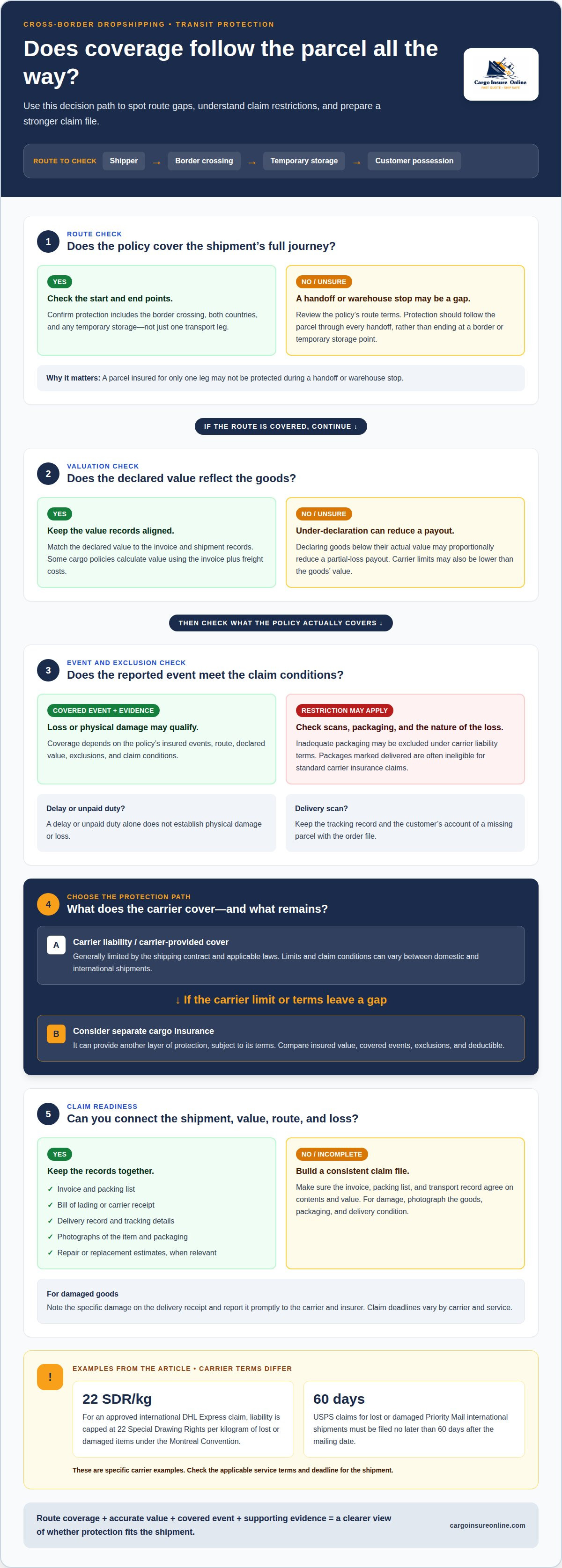
Coverage should match the shipment’s full journey, including the border crossing, both countries, and any temporary storage. A parcel insured for only one transport leg may have a gap during a handoff or warehouse stop. The policy’s start and end points define when protection applies.
Courier Limits and Declared Value
Courier cover is the limited protection included with or purchased through a carrier. Declared value is the amount recorded for the shipment.
Royal Mail coverage limits and evidence requirements depend on the service and applicable claim terms. For any carrier claim, keep the shipping receipt, records of the item’s value, and photographs of any damage. Declaring goods below their actual value may proportionally reduce a partial-loss payout. Some cargo policies calculate value using the invoice plus freight costs.
Evidence, Exclusions, and Packaging
Claim evidence connects the reported loss to the shipment, while exclusions identify circumstances the policy does not cover. Photograph each item and its packaging before dispatch. If damage occurs, photograph the goods, packaging, and delivery condition.
Packaging can affect whether damage qualifies for a claim: inadequate packing may be excluded under carrier liability terms. For freight, sturdy pallets, stretch wrap, corner protection, and sealed boxes help protect cargo during handling. Clear labels on more than one side also help identify each piece in transit.
Before shipping, align the invoice, packing list, and transport record, then keep them with the delivery receipt and photographs. Read the policy’s covered events and exclusions alongside its route and valuation terms. Together, these details show whether protection follows the parcel through every handoff, rather than ending at the border or a temporary storage point.
Standard carrier insurance limits and claim restrictions
Carrier liability for lost or damaged cargo is generally limited by the shipping contract and applicable laws. That limit may be lower than the goods’ value, and domestic and international shipments may have different claim conditions. Review the carrier’s liability terms alongside any separate policy to understand who handles the claim and what evidence is required.
For an approved international DHL Express claim, liability is capped at 22 Special Drawing Rights per kilogram of lost or damaged items under the Montreal Convention. USPS claims for lost or damaged Priority Mail international shipments must be filed no later than 60 days after the mailing date. Those examples show why a carrier limit and a claim deadline matter before ecommerce goods leave the warehouse.
Customs delays, duties, and delivery disputes can complicate a US parcel claim by making it harder to establish where a shipment stopped or who had custody. Insurance decisions depend on the policy’s covered events and evidence of loss or damage. A delay or unpaid duty alone does not establish physical damage or loss.
Build a clear international claim file
A complete claim file connects the order to its contents, value, route, and reported damage. Keep the invoice, packing list, bill of lading or carrier receipt, delivery record, tracking details, photographs, and any repair or replacement estimates together. The invoice, packing list, and transport record should agree on the shipment’s contents and value.
For damaged goods, note the specific damage on the delivery receipt and report it promptly to the carrier and insurer. For a fragile product, take clear photographs of both the item and its packaging, not just a close-up of the break. Reporting deadlines vary by carrier and service, so check the applicable deadline before filing.
Shippo accounts and missing deliveries
When a shipment was purchased through a Shippo carrier account, a claim needs the order reference, tracking number, shipping label details, item value, and evidence of loss or damage. The account holder’s records help identify the carrier and service used. An organized claims process matches these details to the policy and submits the supporting documents through the appropriate channel.
A delivery scan can complicate porch-pirate or delivered-but-missing claims: packages marked delivered are often ineligible for standard carrier insurance claims. Keep the tracking record and the customer’s account of the missing parcel with the order file. A claims provider can distinguish a carrier claim from an insured-loss claim and identify the records that support each, for both domestic and international deliveries.
For a lost shipment, the claim centers on tracking history, carrier correspondence, and proof of the shipment’s contents. For damage, it also relies on delivery records, photographs, and repair or replacement estimates. These records give the claims reviewer a consistent account of what shipped, what happened, and the resulting financial loss.
How can high-volume ecommerce shippers choose a professional shipping insurance provider?
High-volume shippers need protection suited to their goods, routes, and claims workflow. The policy terms should be clear before parcels enter the carrier network.
Protection for Transit Damage and Total Loss
Optional shipping protection adds cover for specified transit damage or total loss beyond a carrier’s limited liability. It can matter when a shipment’s value exceeds the carrier’s applicable limit or the seller needs protection across multiple transport legs.
For a high-volume ecommerce operation, the policy should explain covered events, valuation, deductibles, exclusions, and route boundaries. Reviewing these terms against the seller’s shipment profile can clarify how they apply to fragile goods moving through several handoffs. Physical-damage cover may not treat delays, missing tracking scans, or other disruptions as insured losses.
Coverage should also reflect how a business records each order. Consistent shipment values and item descriptions help align the declared amount with invoices and claim evidence. If records show different values, the claims process may require additional documents to reconcile them.
Coverage for Lost, Stolen, or Damaged Parcels
Parcel insurance can protect against covered loss, theft, or physical damage during the insured journey. For a Shopify store, checkout shipping protection is an optional choice presented alongside delivery options. Its scope depends on the policy behind it.
A clear arrangement explains what happens when tracking shows delivery but the customer reports a missing package. That differs from a parcel recorded as lost in transit or an item that arrives damaged. An organized claims process classifies the event, gathers order and tracking details, and identifies the documents needed for filing.
For larger shipping programs, consistency matters. Protection should apply to the shipment types and routes the seller actually uses, and the claims workflow should handle repeat orders without mixing evidence between parcels. A fragile item and a sealed electronics parcel may require different damage records.
Carrier Liability Compared with Shipping Insurance
Carrier liability is the carrier’s contractual responsibility for a shipment. Shipping insurance is separate cover governed by its policy terms. This distinction matters because carrier liability may be limited and may not match the goods’ value.
For example, an ecommerce seller shipping a $20 T-shirt weighs the item’s replacement value against the insurance fee and deductible. Higher-value goods create a different exposure. The right comparison considers declared value, covered risks, exclusions, and who handles filing, not simply whether a carrier offers basic protection.
A provider should explain the boundary between carrier liability and insured cover, including how to submit claims and which records support them. For a business using multiple routes, coverage terms should align with each shipment’s journey and handoffs. That clarity helps sellers judge where optional protection adds value, rather than assuming carrier and insurance claims follow the same process.
Carrier-provided and third-party insurance
Carrier-provided cover is arranged through the shipping carrier; third-party insurance is arranged separately. Both can protect shipments, but their coverage terms, valuation, exclusions, and claims handling may differ. For a cross-border dropshipping order, compare the actual policy wording rather than assuming either option covers every loss.
Which shipping insurance providers cover dropshipping and international parcels? Carriers may offer protection for shipments they transport, while independent cargo insurers may cover eligible goods on international routes. The policy terms determine which shipments, risks, and transit stages qualify.
Carrier cover can be convenient because the shipment and protection are part of one carrier transaction. However, liability limits and claims remain subject to that carrier’s terms. Third-party insurance may provide a separate policy for cargo moving through several transport stages. The difference matters when a parcel passes between carriers or countries, so check the route boundaries.
For dropshipping cross border transit damage and lost parcel insurance, compare each option with the shipment records your ecommerce operation already creates. The declared value should match the invoice and packing list. Some cargo policies value goods using invoice value plus freight costs, which affects how a loss is assessed. A mismatch can leave the insured value out of step with the shipment documents.
- Covered events: Identify whether the policy covers damage, total loss, or both.
- Route: Match insured transit stages to the parcel’s full journey, including border crossings and temporary storage.
- Exclusions: Note restrictions that could affect fragile goods, packaging, or particular causes of loss.
- Deductible: Account for the amount absorbed on each claim when comparing protection.
- Claims: Understand which party receives the filing and what documents support it.
These points help distinguish meaningful insurance coverage from an extension of carrier liability. If a carrier’s limit is below the shipment’s declared value, separate insurance may address the gap, depending on its terms. For a low-value product, the replacement cost may not justify extra protection. The decision depends on the goods’ value, deductible, and policy conditions.
Documentation also shapes the experience after a loss. Keep the invoice, packing list, shipment record, delivery receipt, and photographs together. If a package arrives damaged, evidence of both the item and its packaging can support your account of what happened. A consistent file makes the shipment easier to identify and the claim easier to assess.
For recurring international orders, compare policies using the same shipment examples and records. A side-by-side review of dropshipping cross border transit damage and lost parcel insurance terms, including covered routes, valuation, exclusions, and claim requirements, reveals where each option fits. Choose based on the operation’s actual risks, not assumptions about carrier liability.
Insurance for lost, stolen, and damaged parcels
A parcel that never arrives, disappears after delivery, or arrives broken creates a different claim scenario. In the United States, roughly 345 million packages are lost or stolen in last-mile deliveries annually. That figure includes distinct events, so the claims process needs to establish whether the shipment went missing in transit, was stolen, or suffered physical damage.
For cross-border orders, insurance may cover losses a carrier rejects, depending on the policy terms. This can matter when a seller faces a missing parcel but the carrier’s records do not establish carrier liability. Coverage still depends on the insured route, declared value, covered event, and applicable exclusions. A delivery scan alone does not prove the customer received the package.
Distinguish a theft report from a transit-loss report. For a delivered-but-missing order, keep the tracking details and customer’s report, then document the carrier’s response. If a parcel stops moving, retain the shipping receipt and tracking history. For damage, photograph the item and packaging before disposal or repair, and note the damage on the delivery receipt if possible.
- Missing in transit: Keep the order record, tracking history, and carrier correspondence together.
- Reported stolen: Record the delivery status and customer’s account of the missing package.
- Arrived damaged: Photograph the parcel and contents, and retain repair or replacement estimates.
- Declared value: Keep the invoice and shipment details aligned to support the claimed loss.
The scale of last-mile theft makes clear why event details matter. Porch pirates stole at least 58 million packages in 2023, valued at $12 billion. At least one-quarter of Americans have had a package stolen at some point in their lives. These figures describe different measures, not a prediction for an individual order; a claim still needs evidence tied to its own tracking record and delivery.
For damaged items, a claim may require two repair estimates and detailed photographs of both the packaging and goods. An invoice supports the item’s value, while photographs show its reported condition. When considering replacement, compare the documented loss with the policy’s valuation method and deductible. Keep the original packaging available during the assessment, as it may show whether damage relates to transit or packaging.
Most shipping insurance cases are resolved within 3-5 business days after the required documents are received. A complete file helps the claims process distinguish a lost parcel from theft or damage. Explore cargo insurance options for shipments exposed to cross-border transit losses.
Cargo Insure Online
Cargo Insure Online helps businesses assess cargo protection for shipments crossing borders. When carrier limits leave a potential gap, its Air Freight Insurance, Sea Freight Insurance, Trucking Insurance, and GAP Insurance offer options to consider based on the shipment’s transport needs. The appropriate cover depends on the route, goods, and policy terms.
For a dropshipping operation, the next step is to map the shipment journey against the risks and records discussed above. This creates a clearer basis for considering protection across transport legs and understanding how it relates to carrier liability.
Contact Cargo Insure Online to discuss insurance options for your shipments.
Make shipment protection part of your next growth step
As your dropshipping operation adds products or routes, include insurance in the planning. A new destination or product can change the transit chain and the evidence needed after a loss. Treat dropshipping cross-border transit damage and lost-parcel insurance as part of shipment planning, rather than an afterthought when an order goes missing. This gives your team a clearer framework for reviewing coverage as the business evolves.
Cargo Insure Online offers Air Freight Insurance, Sea Freight Insurance, and Trucking Insurance for cargo moving through different transport modes. The right fit depends on your shipment and the policy terms. A focused conversation can help connect your shipping needs with the available insurance options.
Contact Cargo Insure Online to discuss coverage for your shipments. Take the next step with a clearer plan for protecting the orders your customers rely on.
Frequently Asked Questions
How does it work?
Transit insurance applies policy terms to a shipment exposed to a covered event. The shipment record identifies the goods, declared value, and journey; a claim connects those details to evidence of loss or damage. For a dropshipping order, distinguish the customer’s order number from the carrier’s tracking number so both records identify the same parcel.
What’s covered?
Coverage depends on the policy, but may include insured damage or loss during the stated transit period. One useful distinction is partial loss versus total loss: a damaged item may retain repair value, while an unrecoverable parcel may involve replacement value. The policy’s valuation terms determine how the loss is assessed, so an invoice alone may not explain every component.
How does a professional provider handle an insurance claim?
A claims handler reviews the shipment details, reported event, and supporting records against the policy terms. For a consolidated shipment, they may need to identify the affected parcel or item, not just the overall freight reference. Clear item-level records help separate damaged goods from unaffected contents and connect the claimed amount to the correct shipment.
What are the benefits of package insurance?
Package insurance can reduce a seller’s direct financial exposure when an insured parcel is lost or damaged. It also provides a defined process for presenting evidence and assessing the claimed loss. For example, a seller shipping several product types can keep order values linked to shipment records, making it easier to identify the affected customer order without confusing it with other parcels.
What’s excluded?
Exclusions are events or conditions the policy does not insure. Inadequate packaging may be excluded as a cause of damage under carrier liability terms, while cargo policies may cover broad risks or only listed events. A claim may also depend on whether the reported cause matches a covered event. Review exclusions alongside the main coverage wording, not as an afterthought.
What exclusions apply to cross-border parcel insurance for dropshippers?
Cross-border exclusions depend on the policy wording and shipment route. A temporary warehouse stop or carrier handoff may matter if the insured journey excludes that transit stage. Policies may also distinguish physical loss from delay or other disruption. Map the parcel’s actual route against the policy’s stated transit period and covered events.
How does a professional provider handle a claim for a damaged or lost international parcel?
The claims process first distinguishes physical damage, a parcel that stopped moving, and a delivery dispute, then organizes the claim around the event. For damage, item photographs and repair estimates help describe the loss. For a missing parcel, tracking history and carrier correspondence show what happened along the route. Matching evidence to the event keeps the claim focused.
What evidence and deadlines should you prepare for a cross-border shipping insurance claim?
Prepare the order and shipment references, invoice, packing list, carrier record, delivery receipt, photographs, and relevant repair or replacement estimates. Deadlines vary by carrier, service, and policy, so record the mailing date, discovery date, and reporting cutoff for each claim. A per-parcel claims log helps prevent documents or deadlines from being mixed between international orders.


