
A truck policy doesn't automatically protect the freight inside it. Motor truck cargo insurance coverage can help protect goods carried for others if they’re lost, damaged, or harmed by covered events such as fire, collision, or theft. The policy’s terms determine which losses qualify and how much it can pay.
That distinction matters when a shipment is damaged: cargo coverage addresses the goods, while commercial auto coverage addresses different risks involving the vehicle. Neither the policy name nor a broad label tells the whole story. The covered events, exclusions, limits, and shipment conditions do.
This guide explains what motor truck cargo insurance may cover, how all-risk and named-perils policies differ, and which exclusions and eligibility rules can affect protection. You’ll also learn what shapes coverage limits, when separate cargo insurance may be needed alongside commercial auto coverage, and how trucking insurance can fit into a wider freight-protection plan. Clear terms help you understand where a policy responds and where a gap may remain.
Key Takeaways
- Separate cargo, freight, and transportation insurance by the risk each policy is designed to address, not just by its name.
- Read exclusions and eligibility conditions closely; restrictions can change how protection applies to particular shipments and losses.
- For trucks hauling household goods, U.S. federal rules require at least $10,000 in cargo insurance per occurrence, according to the Federal Motor Carrier Safety Administration.
- Set limits around the freight’s value and shipment needs, and pay attention to details such as debris-removal limits and loading or unloading terms.
- Match cargo protection with commercial auto coverage so the goods and the vehicle have distinct protection for their respective risks.
What is motor truck cargo insurance?
Motor truck cargo insurance coverage protects goods a for-hire carrier transports, subject to the policy terms. It can respond to covered loss or damage, while freight and transportation insurance describe broader or different aspects of shipment risk.
Freight usually means the goods being moved or the charge for moving them. Cargo insurance focuses on the goods. Transportation insurance can describe protection for goods moving by truck, air, sea, or multiple modes. Compare the insured property, covered journey, exclusions, and policyholder’s responsibility, not just the product label.
For a useful quote comparison, match each proposal against the same cargo types, routes, limits, deductibles, exclusions, and optional coverage. Then compare how each policy treats storage, loading, unloading, and claim documentation.
Post-Loss Expenses and Freight Charges
A covered loss can create costs beyond repairing or replacing freight. Sue-and-labor coverage may help pay for reasonable steps to prevent further cargo damage, such as arranging salvage. Debris removal may also be covered when the policy provides for it.
Earned freight charges may need additional coverage if the policy doesn’t include them. Uncollectible freight charges are different: after covered cargo damage, a carrier may be unable to collect the agreed transport charge. Review whether the policy covers this financial loss and what conditions apply.
Legal and Contractual Requirements
Cargo insurance may not be legally required in every trucking situation, but customers can make it a condition of doing business. Shippers and brokers may also require proof of cargo coverage before hiring a carrier or assigning a load.
Some customers require all-risk protection, while others set their own limits or cargo conditions. Before accepting freight, compare the contract’s insurance requirements with the policy’s covered goods, exclusions, and limits.
How much does it cost in the United States? The price depends on the case and is given after a quote request; cargo type and value, routes, limits, deductibles, and claims history can affect it.
Contingent cargo coverage is designed to address a freight broker’s exposure when a carrier’s cargo policy doesn’t respond, subject to its terms. Brokers should compare its scope with their contractual responsibilities and the carrier coverage required by shipper agreements.
To file a cargo claim, notify the insurer promptly, limit further damage, and preserve evidence. Gather the bill of lading, freight invoice, delivery records, photographs, inspection findings, and communications about the loss. These documents help establish what was transported, its condition, and the amount claimed.
Cargo exclusions and eligibility restrictions
A policy’s exclusions define where protection stops, while eligibility terms specify which freight and operations it accepts. Compare the wording with actual shipments, including cargo type, refrigeration needs, and loading arrangements.
Excluded Cargo and Activities
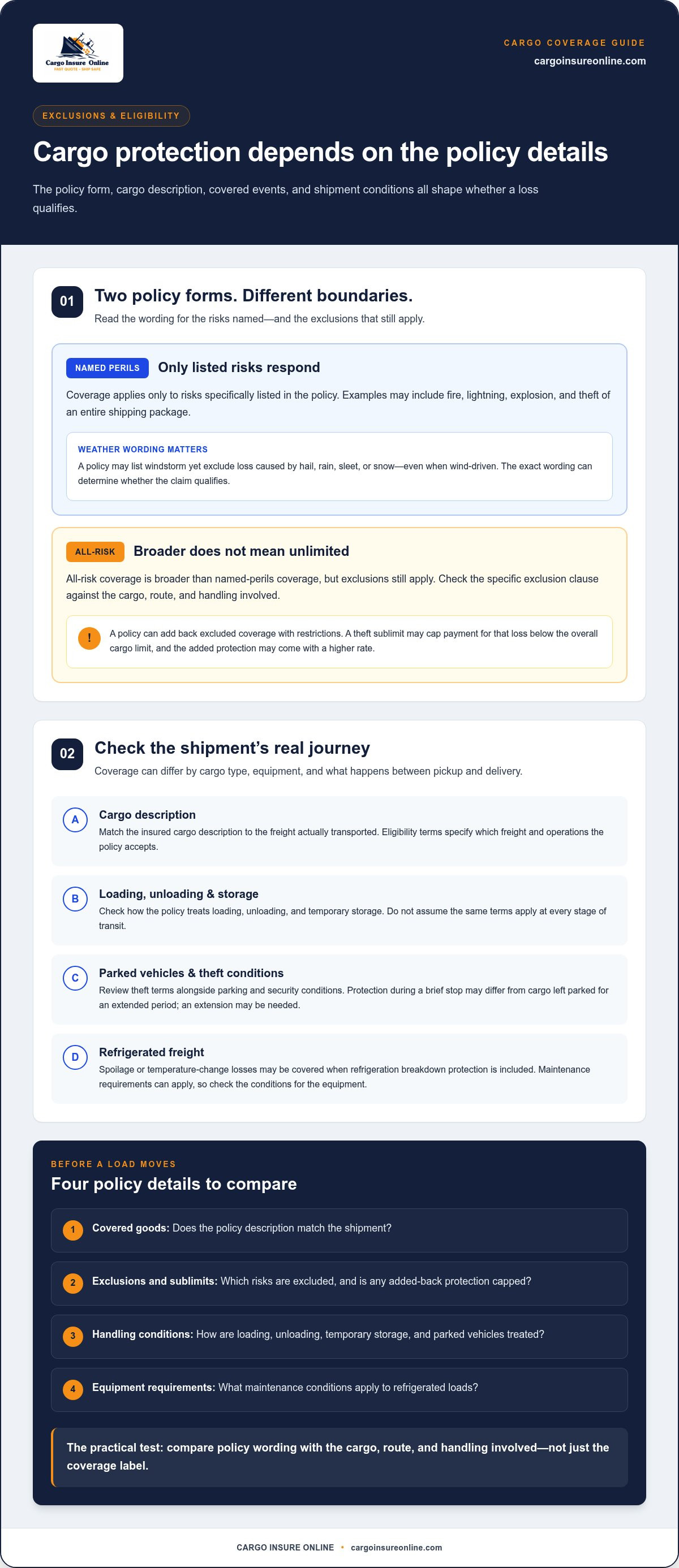
Named-perils coverage responds only to risks specifically listed in the policy. Examples may include fire, lightning, explosion, and theft of an entire shipping package. A named-perils policy may list windstorm but exclude loss caused by hail, rain, sleet, or snow, whether wind-driven or not. That distinction can determine whether a weather-related claim qualifies.
Activities matter, too. Read the policy’s terms for loading and unloading, temporary storage, and cargo left in a parked vehicle. Coverage during a brief stop may differ from protection for cargo parked for an extended period, which may require an extension. Don’t assume the same terms apply at every stage of transit.
Temperature-sensitive freight needs special attention. Spoilage or temperature-change losses may be covered when refrigeration breakdown protection is included, but maintenance requirements can apply. For example, a refrigeration failure and a missed inspection may be treated differently under the policy’s conditions.
Coverage Limitations and Eligibility
All-risk coverage is broader than named-perils coverage, but “all-risk” doesn’t mean every cause of loss is covered. Policy exclusions still apply. Check the specific clause behind an exclusion, then compare it with the cargo, route, and handling involved in each shipment.
Some carriers may add back excluded coverage with restrictions, such as a theft sublimit and a higher rate. A sublimit can cap payment for a particular loss even when the overall cargo limit is higher. Compare both figures in the policy and note which excluded risk the additional protection addresses.
- Match the insured cargo description to the freight actually transported.
- Review theft terms alongside vehicle-parking and security conditions.
- Check maintenance requirements for refrigerated loads and equipment.
- Confirm how loading, unloading, and temporary storage are treated.
These checks help reveal gaps before a load moves. For online retailers shipping customer orders, e-commerce cargo insurance may be relevant to protecting goods in transit. The key is to align the policy’s covered goods and exclusions with the shipment’s real handling path.
Factors affecting coverage limits and eligibility
Limits should reflect the freight’s value and the largest shipment exposure, not just a standard figure. Shipment contracts, deductibles, and debris-removal terms can also affect how much protection applies after an accident.
Typical U.S. Cargo Coverage Limits
In the U.S. market, cargo limits commonly range from USD 100,000 to USD 200,000. Higher limits may be needed for more valuable freight. For trucks hauling household goods, U.S. federal rules require at least $10,000 in cargo insurance per occurrence, according to the Federal Motor Carrier Safety Administration.
Compare the policy limit with the value of a full load, not just an average shipment. If one vehicle carries goods for several customers, a single accident could affect multiple claims. Check whether the limit applies per vehicle, per occurrence, or on another specified basis, then compare it with shipper contract requirements.
What affects motor truck cargo insurance premiums? Cargo type and value, routes, selected limits, deductibles, and the carrier’s loss exposure all influence pricing. A route carrying high-value electronics presents a different exposure from one transporting lower-value, non-fragile freight.
Named-shipper terms and specified-trip limits can narrow protection to a particular customer or journey. Read the schedule for the named shipper, covered freight, route, and trip dates. If a load falls outside those details, the policy may not provide the intended limit for that movement.
Deductibles and Debris Removal Limits
A deductible is the amount the policyholder pays toward a covered loss. Compare it with the cargo limit and the value of typical loads. A higher deductible changes the carrier’s share of a claim, while optional coverage may have a separate deductible.
Debris removal is another distinct limit to examine. After damaged freight creates cleanup costs, the cargo limit may not show the maximum available for removal. Check the stated debris-removal amount and whether it needs to be increased for the cargo, handling, or cleanup exposure involved.
Eligibility depends on the insured operation and the freight being carried. Before binding coverage, match the application and policy schedule to actual cargo descriptions, routes, named shippers, and trip limits. Include temperature-sensitive goods when relevant, since refrigeration risks and maintenance conditions can affect eligibility and covered losses.
Use a short comparison checklist: match limits, deductibles, named-shipper terms, specified-trip wording, and debris-removal provisions. Then compare them with the largest load and the shipper contract. This helps reveal whether the selected limit fits the actual exposure, rather than merely meeting a baseline requirement.
Adding cargo coverage to a commercial auto policy
Commercial auto and cargo insurance address different risks in a trucking operation. Understand both before deciding whether cargo protection should stand alone or sit alongside an auto policy.
Commercial auto policies typically exclude cargo in the motor carrier’s care, custody, and control. Cargo insurance is designed for goods transported on behalf of others. Depending on the insurer, it may be a standalone policy or an endorsement to a standard trucking liability policy.
That distinction matters after a collision. Commercial auto coverage and cargo protection don’t automatically respond to the same loss. The vehicle itself also needs physical damage coverage for risks such as collision, theft, and vandalism. Cargo insurance protects the freight, not the truck.
To coordinate policies, map each exposure to the coverage designed for it:
- Commercial auto: Review the policy for the trucking operation’s vehicle-related risks.
- Cargo: Match covered goods and shipment conditions to the freight carried for customers.
- Vehicle damage: Review physical damage protection separately from cargo terms.
Then compare the cargo policy’s covered property, limits, exclusions, and deductibles with the auto policy’s scope. For example, if a carrier hauls customer goods and owns the truck, damage to the freight and damage to the vehicle are separate exposures. One policy shouldn’t be treated as a substitute for the other.
Cargo insurance isn’t generally a legal requirement for trucking companies, but shippers or clients may require it. A shipper might ask for proof of all-risk cargo coverage before awarding a load. Contract requirements may also specify a limit or particular cargo terms, so compare the agreement with the policy documents before accepting the shipment.
Use this sequence when assessing an existing setup:
- List the vehicles, freight types, and customer shipments involved.
- Identify which risks the commercial auto policy addresses.
- Review cargo protection for goods in the carrier’s care, custody, and control.
- Compare both policies against shipper contracts and identify gaps or overlapping terms.
Carriers with a trucking liability policy can compare a cargo endorsement with a standalone cargo policy. The right structure depends on the insurer’s available form and the operation’s exposures. Focus on how each option defines covered freight and responds to a claim, rather than assuming an endorsement meets every cargo need.
Keep policy records and shipment agreements together. When a loss occurs, the bill of lading and contract help show what the carrier agreed to transport, while the policy wording establishes which coverage applies. This document trail helps distinguish cargo losses from vehicle losses and assess each claim under the relevant policy.
What motor truck cargo insurance covers
Motor truck cargo insurance protects freight a carrier transports for someone else, subject to policy terms. The practical question is which goods, events, and parts of the journey the policy covers.
An all-risk policy covers cargo against risks unless the policy specifically excludes them. Named-perils coverage responds only to causes listed in its wording. Examples include fire, lightning, explosion, and theft of an entire shipping package. It may also cover certain bridge, dock, overpass, or ramp collapses.
Named-perils policies may cover the stranding, sinking, burning, or collision of a ferry operating only on inland waterways. Some list windstorm but exclude losses caused by hail, rain, sleet, or snow, whether wind-driven or not. Read the peril list and exclusions together. A broad policy label doesn’t replace those details.
After cargo is damaged, coverage may pay repair or replacement costs for the affected goods. Some policies may also cover debris and pollutant cleanup expenses caused by the cargo being hauled. Check the removal limit separately, since cleanup costs and the value of the goods are distinct parts of a loss.
Refrigerated loads need another close read. Spoilage or temperature-change losses may be covered when refrigeration breakdown protection is included. The policy may require the insured to meet maintenance conditions. For a reefer shipment, compare those requirements with inspection and maintenance routines for the vehicle, trailer, and refrigeration unit.
Coverage can also depend on where freight sits between pickup and delivery. Cargo may remain covered while a truck is parked, but an extension may be required if it stays parked for an extended period. Temporary storage or warehousing during transit delays may also be covered, subject to policy conditions. Review loading and unloading terms separately, because policies may cover or exclude those steps.
Cargo insurance protects the goods, not the truck. Vehicle damage from collision, theft, or vandalism requires separate physical damage coverage. That distinction helps carriers assign each loss to the policy designed for it.
Before a shipment moves, compare its cargo description, route, handling, and storage plans with the policy wording. Confirm how the applicable limit, deductible, exclusions, and optional coverages affect the specific load. For goods moving by road, explore cargo insurance options suited to freight in transit.
Cargo Insure Online: Air Freight Insurance
Cargo Insure Online offers Trucking Insurance for businesses moving freight by road. If shipments also move by air or sea, its Air Freight Insurance and Sea Freight Insurance address those transport modes. Choose the offering that matches the journey your goods make, then consider how coverage needs change across connected legs.
For example, a shipment traveling by truck before an air connection involves more than one transport stage. Aligning protection with each stage can help shippers and carriers identify where cargo risks arise and what coverage to consider. GAP Insurance is also available for relevant financial exposure.
Review your shipment route and cargo needs, then visit cargoinsureonline.com to explore the appropriate insurance option.
Build a clearer protection plan for your next shipment
Connect policy terms with the way your freight actually moves. Map the shipment route, cargo value, handling stages, and customer requirements before choosing or adjusting protection. This gives you a practical basis for deciding which risks need attention and how coverage should align with your operation.
For shipments moving across different transport modes, consider how each leg fits into your wider cargo plan. Cargo Insure Online offers Trucking Insurance, Air Freight Insurance, and Sea Freight Insurance for distinct freight journeys. Focus on the option that matches your shipment’s route and insurance needs.
Make the next policy conversation specific. Bring the cargo details, route, and contract requirements you’ve identified, then discuss how they fit the coverage you need. Contact Cargo Insure Online today to explore the available options for your freight. A more deliberate approach to motor truck cargo insurance coverage can help you move forward with greater clarity and confidence.
Frequently Asked Questions
What Is Typically Not Covered?
Losses excluded by the policy wording or outside its stated conditions typically aren’t covered. For example, named-perils wording may list windstorm but exclude losses caused by hail, rain, sleet, or snow. Long-term parking may require an extension, and refrigeration-breakdown protection may depend on maintenance requirements. Compare the exclusion, any endorsement, and the event that caused the loss before deciding whether the policy responds.
What does motor truck cargo insurance cover?
It can cover loss or damage to goods carried for others, according to the policy terms. Depending on the selected form, protection may apply to listed causes or risks not specifically excluded. Keep a useful claim record linking the goods to the shipment: the bill of lading, delivery documents, and evidence of the cargo’s condition. The truck itself requires separate vehicle protection.
What types of cargo are excluded from motor truck cargo insurance?
There isn’t one exclusion list that applies to every policy. The wording identifies eligible goods, excluded commodities, and special conditions. Livestock and mobile homes, for example, are commonly insured through named-perils forms. Refrigerated shipments also require attention to breakdown protection and maintenance conditions. Match the policy’s cargo description to the actual load, rather than assuming a commodity is covered because similar freight appeared on past trips.
What is the difference between motor truck cargo insurance and freight insurance?
Motor truck cargo insurance specifically concerns goods transported by truck; “freight insurance” can describe cargo protection more broadly. The phrase alone doesn’t tell you which transport modes or shipment stages are insured. For a load moving by truck and then by air, identify each leg, the insured party, and the policy’s transit terms. This helps show whether one policy covers the full journey or only the road portion.
How much motor truck cargo insurance coverage do trucking companies need?
Choose limits based on the value of the largest load, the carrier’s exposure per vehicle or occurrence, and customer contracts. U.S. federal rules require at least $10,000 in cargo insurance per occurrence for trucks hauling household goods, according to the Federal Motor Carrier Safety Administration. In the U.S. market, limits commonly range from USD 100,000 to USD 200,000, with higher limits sometimes required for the freight.
What are typical motor truck cargo insurance limits and deductibles?
U.S. cargo limits commonly range from USD 100,000 to USD 200,000, though freight value and shipper requirements can call for higher limits. Deductibles depend on the policy terms, so compare the amount the carrier retains with the value of its typical loads. Also review optional coverage separately: diminishing-deductible terms don’t apply to separate deductibles for optional coverages.


